Blown Head Gasket: Symptoms, Cost & Fix Guide (2026)
If someone recently told you that you have a blown head gasket, I completely understand the sinking feeling that comes with those words. A blown head gasket is one of the most feared diagnoses a car owner can receive — and for good reason. But before you panic, let me walk you through everything in plain, honest language. What a head gasket actually is, what the most common blown head gasket symptoms look like, how much head gasket repair actually costs, whether a head gasket sealer is a real solution, and what your best options are for blown head gasket repair. By the end of this guide, you will have a clear picture of your head gasket situation — and exactly what to do about it.
I’m going to walk you through everything in plain, honest language. What a head gasket actually is, what a blown head gasket looks and feels like, how much repairs cost, whether a head gasket sealer is a real solution or just a temporary patch, and how to figure out the best next step for your specific situation. By the time you finish reading this, you’ll know exactly what you’re dealing with — and what to do about it.
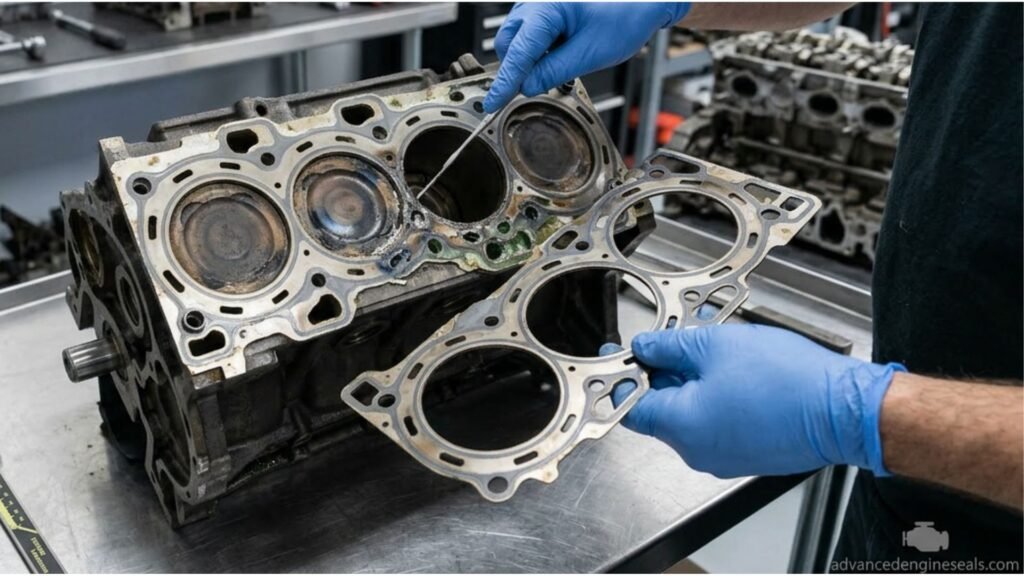
What Is a Head Gasket?
Before we talk about what goes wrong, it helps to understand what a head gasket actually does — because once you understand its job, you’ll immediately understand why a failure is such a big deal.
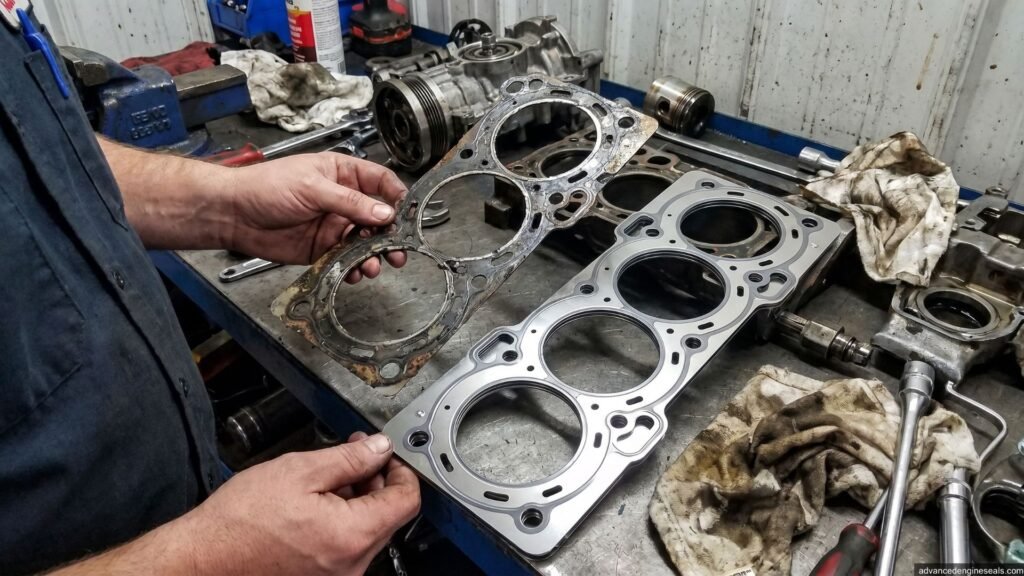
Your engine is made up of two main sections bolted together: the engine block on the bottom (where the pistons and crankshaft live) and the cylinder head on top (where the valves and camshaft live). The cylinder head gasket — more commonly just called the head gasket — is the thin but extremely important seal that sits between these two sections.
That seal has to do three things at once, and it has to do all of them perfectly:
- Seal the combustion chambers so the pressure from burning fuel stays where it belongs and actually drives the pistons
- Keep engine oil in its own separate passages so it can circulate and lubricate without mixing with anything else
- Keep coolant in its own separate passages so it can flow through the engine and keep temperatures under control
Think about how demanding that job is. The head gasket sits in an environment of extreme heat, massive pressure, and constant vibration — every single time you start your car. It’s essentially doing a three-way balancing act, and it has to hold up for hundreds of thousands of engine cycles.
Most head gaskets are made from multiple layers of steel with rubber or graphite coating on the sealing surfaces. They’re engineered to be incredibly tough — but they’re not invincible, and eventually, things go wrong.
A good head gasket can last the lifetime of the car — 200,000 miles or more with proper maintenance. But overheating, poor coolant maintenance, or just bad luck can cut that life dramatically short.
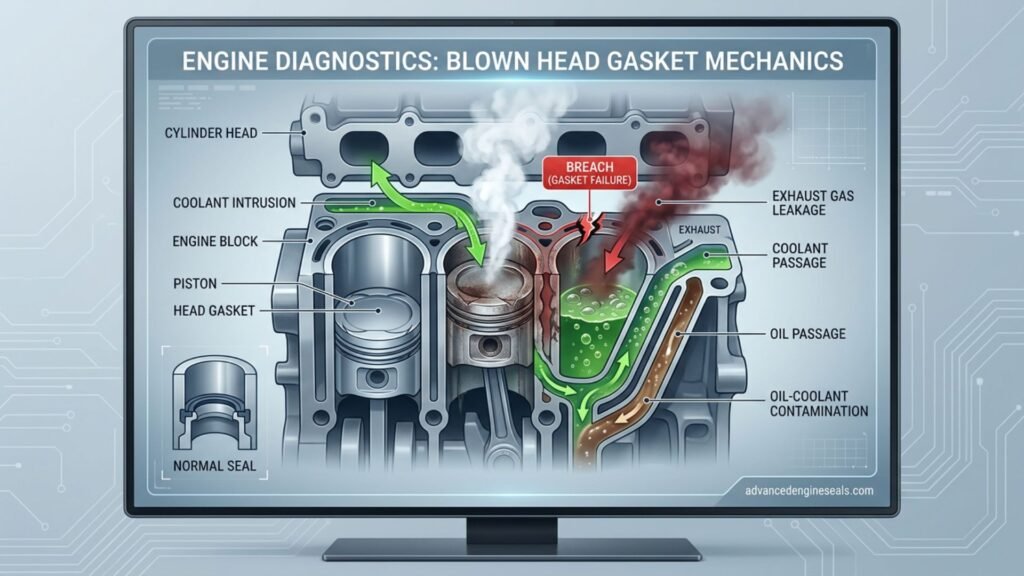
What ?
Understanding what causes a blown head gasket matters — because it helps you choose the right repair path and avoid the same problem happening again.
The number one cause of a blown head gasket is engine overheating. When the engine runs too hot, the metal expands unevenly. The cylinder head and engine block expand at different rates, and that unequal stress tears the head gasket apart. In some cases, a single severe overheating event is enough to cause a blown head gasket.
Other contributing causes include:
- Old, degraded coolant that becomes acidic and slowly eats away at the cylinder head gasket sealing surfaces
- High mileage — after 150,000+ miles, even a well-maintained head gasket simply wears out
- Engine knock or detonation, which creates violent pressure spikes that stress the head gasket far beyond its design limits
- Known manufacturer defects — certain engines like the older Subaru EJ series are historically prone to blown head gasket failures
- Improper previous repair — if head bolts were not torqued correctly during a past job, the head gasket was never properly sealed to begin with
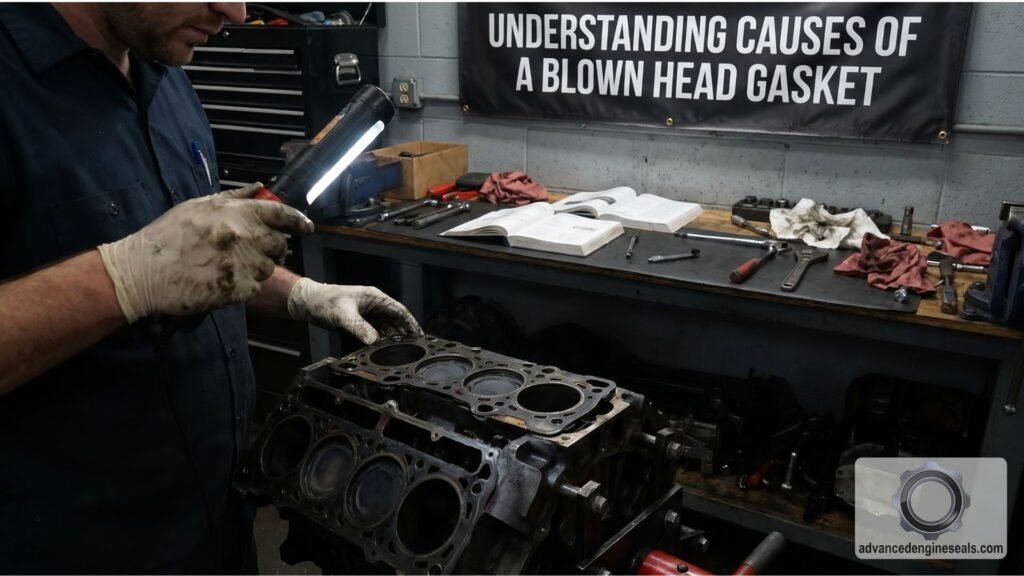
Head Gasket Replacement Cost — The Real Numbers
Let’s talk money, because this is where most people’s anxiety peaks. Head gasket replacement cost is genuinely one of the more expensive common car repairs — but the range is enormous, and understanding why helps you know what questions to ask.
| Vehicle Type | Parts Cost | Labor Cost | Total Estimate |
|---|---|---|---|
| Basic 4-cylinder (e.g. Honda, Toyota) | $40 – $120 | $600 – $1,200 | $650 – $1,320 |
| Mid-size / V6 engine | $80 – $180 | $900 – $1,800 | $980 – $1,980 |
| V8 / Performance engine | $120 – $300 | $1,200 – $2,500 | $1,320 – $2,800 |
| European luxury brands | $200 – $500 | $1,500 – $3,500 | $1,700 – $4,000+ |
| With cylinder head resurfacing | +$150 – $400 | Included above | Add to above |
The reason head gasket repair cost is so high compared to something like a valve cover gasket is almost entirely labor. The cylinder head gasket sits deep inside the engine. To reach it, a mechanic has to disassemble a significant portion of the top of the engine — draining coolant and oil, removing the intake manifold, exhaust manifold, timing components, camshafts, and more. On a 4-cylinder engine, this typically takes 6 to 10 hours. On a V6 with two heads, you’re looking at 10 to 16 hours or more.
The parts themselves are often surprisingly affordable — the actual cylinder head gasket might only cost $40 to $80. It’s the labor that dominates the bill.
What Else Might Need Replacing at the Same Time?
One important thing most shops will recommend — and which is genuinely good advice — is to have the cylinder head resurfaced while it’s off the engine. Heat can warp the head slightly, and if it’s not flat, even a new gasket won’t seal properly. Resurfacing typically adds $150 to $400 to the bill but is almost always worth doing. You might also need new head bolts (many engines use torque-to-yield bolts that should be replaced once removed), a new timing belt or chain if it was disturbed during disassembly, and new coolant. These add-ons can push the total cost to replace head gasket higher, but they represent real value — you don’t want to go back in there again in six months.
Always get a written quote that itemizes parts and labor separately. Ask specifically whether the cylinder head will be resurfaced or inspected, and whether the head bolts are being replaced. These details make a big difference in the quality of the repair.
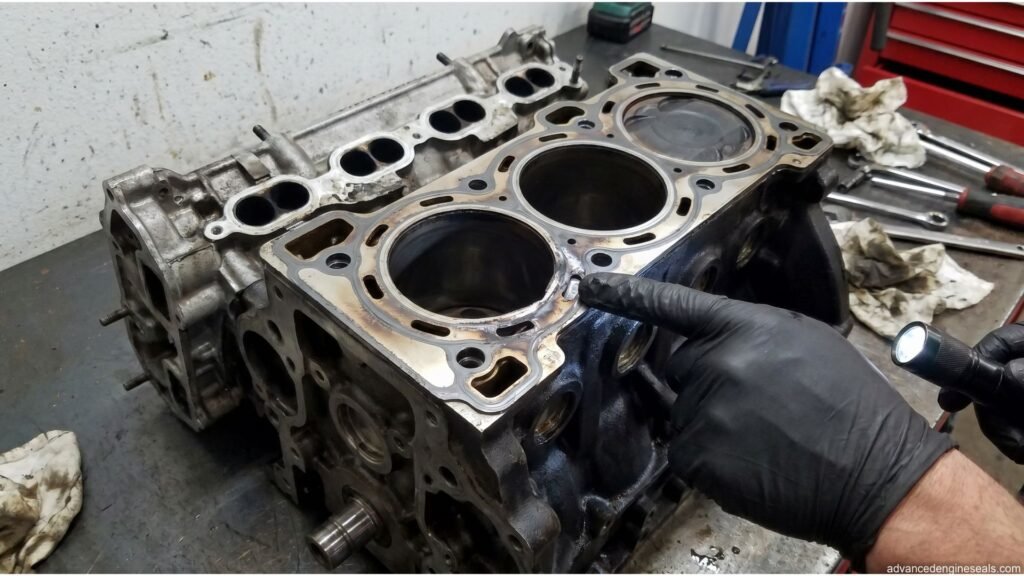
Blown Head Gasket Symptoms — The Warning Signs You Should Know
The tricky thing about blown head gasket symptoms is that they can be subtle at first. Some signs of a blown head gasket are obvious, some are easy to miss, and some mimic other engine problems. Here are the most important blown head gasket symptoms every car owner should know.
1. White Smoke from the Exhaust
Thick, persistent white smoke from the exhaust is one of the most classic signs of a blown head gasket. When the head gasket fails internally, coolant leaks into the combustion chamber and burns with the fuel, producing that sweet-smelling white smoke. A little white vapor on a cold morning is normal — but white smoke that continues after the engine warms up is a serious blown head gasket symptom that needs immediate attention. This is the blown head gasket symptom most people recognize first.
2. Milky Oil — Coolant Mixing with Oil
Pull out your oil dipstick. If the oil looks milky, frothy, or like a chocolate milkshake, you have coolant mixing with engine oil — one of the most damaging blown head gasket symptoms possible. This happens when the cylinder head gasket fails between an oil passage and a coolant passage. Coolant in the oil destroys lubrication and rapidly accelerates engine wear. Check under the oil filler cap too — a creamy brown residue there is another dead giveaway of a blown head gasket.
3. Engine Overheating Repeatedly
If your temperature gauge keeps climbing or your warning light keeps coming on, a blown head gasket may be to blame. A failing head gasket allows coolant to escape into the combustion chamber, dropping the coolant level and reducing cooling ability. The overheating caused the blown head gasket — and now the blown head gasket is causing more overheating. This vicious cycle is one of the most damaging blown head gasket symptoms you can experience.
4. Bubbling in the Coolant Reservoir
With the engine running, look carefully at the coolant reservoir. If you see bubbling or foaming, combustion gases are being pushed into the cooling system through the blown head gasket. A healthy cooling system does not bubble. This is one of the clearest and most reliable signs of a blown head gasket you can spot without any tools at all.
5. Loss of Power and Engine Misfires
A blown head gasket that causes a compression leak between cylinders makes the engine misfire, run rough, and feel weak under acceleration. If the cylinder head gasket has failed between combustion chambers, both cylinders perform poorly. This is a less dramatic but equally important blown head gasket symptom — especially on engines where the head gasket has failed between cylinders rather than externally.
6. Coolant Loss with No Visible Leak
You keep adding coolant but there are no puddles under the car. The coolant is being burned inside the engine through the blown head gasket and exiting through the exhaust as white steam. This silent coolant loss is one of the sneakiest blown head gasket symptoms — and one of the most dangerous, because by the time you notice, the head gasket damage may already be severe.
7. Sweet Smell from Engine or Exhaust
Coolant has a distinctively sweet smell. If you notice that sweet syrupy odor after driving, burned coolant from a failing head gasket is very likely the cause. Your nose is one of the best diagnostic tools you have for catching blown head gasket symptoms early — before the damage escalates.
Stop driving immediately if you notice multiple blown head gasket symptoms at once — especially white smoke combined with coolant loss or milky oil. Every mile driven on a blown head gasket increases engine damage and significantly raises the blown head gasket repair cost.
How to Test for a Blown Head Gasket
Before committing to expensive head gasket repair, you want to confirm the head gasket is actually the problem. Here are the most reliable tests for a blown head gasket.
Head Gasket Tester — The Best DIY Method
The most accessible DIY test for a blown head gasket is a combustion leak tester — commonly called a head gasket tester or block tester. A good head gasket tester costs $25 to $50 and uses a chemical fluid that changes color when it detects combustion gases in the coolant. Hold the head gasket tester over the coolant reservoir with the engine running — if the fluid changes from blue to yellow, combustion gases are present, which strongly confirms a blown head gasket. This is the fastest and most reliable way to test for a blown head gasket at home without a mechanic.
Pro tip: A thorough blown head gasket diagnosis takes time and multiple tests. Any mechanic charging a reasonable diagnosis fee before starting head gasket repair is doing things correctly — a proper diagnosis prevents you from paying for the wrong fix on an expensive job.
Head Gasket Sealer — Does It Really Work?
This is the most common question people ask after a blown head gasket diagnosis — and I want to give you an honest, straight answer about head gasket sealer.
Head gasket sealer is a liquid product you add to the cooling system. It circulates through the engine and hardens when it reaches the leak point to form a seal. Head gasket sealer genuinely works — but only in specific situations. The most widely recommended head gasket sealer on the market today is Blue Devil head gasket sealer. Blue Devil head gasket sealer works well on minor seeps, small pinhole leaks, and early-stage head gasket failures. Many car owners have used Blue Devil head gasket sealer and driven 30,000 to 50,000 additional miles without issues. It consistently gets strong reviews and is considered by many mechanics to be the best head gasket sealer available for minor leaks.
Final Thoughts
A blown head gasket is one of the more serious repairs a car owner faces — but it is absolutely not the end of the road. Understanding what is a head gasket, recognizing the blown head gasket symptoms early, knowing the real head gasket replacement cost, and choosing the right path for blown head gasket repair puts you completely in control of the situation.
How do you tell if a head gasket is blown?
There are several reliable ways to tell if a head gasket is blown — some you can check yourself right now, and some require a mechanic. Here is how to tell if a head gasket is blown step by step:
Check the exhaust — thick white sweet-smelling smoke that does not clear up after the engine warms up is one of the clearest ways to tell if a head gasket is blown internally
Pull the oil dipstick — if the oil looks milky, creamy, or frothy like a chocolate milkshake, coolant has mixed with the engine oil through a blown head gasket
Look at the coolant reservoir with the engine running — bubbling or foaming in the reservoir is a very reliable sign of a blown head gasket pushing combustion gases into the cooling system
Watch the temperature gauge — if the engine keeps overheating even after you top up the coolant, a blown head gasket is likely the cause
Use a head gasket tester (block tester) — hold it over the coolant reservoir while the engine runs; if the chemical fluid changes from blue to yellow, combustion gases are present and confirm a blown head gasket
The fastest way to tell if a head gasket is blown at home is the head gasket tester method — it gives you a clear result in under two minutes and costs only $25 to $50 at any auto parts store.
What causes a blown head gasket?
The number one cause of a blown head gasket — by a very wide margin — is engine overheating. When an engine overheats, the cylinder head and the engine block expand at different rates. This unequal thermal expansion puts enormous stress on the head gasket sitting between them, tearing it apart. Even a single severe overheating event can cause a blown head gasket in an otherwise perfectly healthy engine.
Other common causes of a blown head gasket include:
Old or neglected coolant — degraded coolant turns acidic over time and slowly eats away at the head gasket sealing surfaces from the inside
High mileage — after 150,000+ miles, even a properly maintained head gasket wears out from thousands of thermal cycles
Engine knock or detonation — repeated violent pressure spikes stress the head gasket far beyond its design limits
Known engine design weaknesses — certain engine families like the older Subaru EJ series are historically prone to blown head gasket failures
Improper previous repair — if head bolts were not torqued to the correct specification during a past job, the head gasket was never properly seated to begin with
Understanding what caused your blown head gasket matters — if it was a one-time overheating event on an otherwise healthy engine, full head gasket replacement is absolutely worth doing. If the engine has been repeatedly neglected, the repair decision becomes harder.
How to know if you have a blown head gasket?
Knowing if you have a blown head gasket comes down to watching for the right warning signs and running a simple test. Here is how to know if you have a blown head gasket with confidence:
White exhaust smoke with a sweet smell — if you have a blown head gasket, coolant is burning in the combustion chamber and producing this distinctive smoke
Milky engine oil — check the dipstick; if the oil looks like a milkshake, you have a blown head gasket mixing coolant into the oil
Coolant loss with no puddles under the car — if you have a blown head gasket, coolant is being burned inside the engine and disappearing through the exhaust
Engine overheating repeatedly — a blown head gasket lets coolant escape, lowering the coolant level and causing ongoing overheating
Bubbling coolant reservoir — one of the most definitive signs that you have a blown head gasket pushing combustion gases into the cooling system
The most reliable confirmation of whether you have a blown head gasket is a combustion leak test (head gasket tester) — it detects combustion gases in the coolant and gives you a clear yes or no answer in minutes. If you have a blown head gasket, the tester fluid will change color immediately.
How much does it cost to fix a blown head gasket?
The cost to fix a blown head gasket depends mainly on your engine type and where you take it. Here is a realistic breakdown of how much it costs to fix a blown head gasket in 2025:
4-cylinder engines (Toyota, Honda, etc.): $650 to $1,320 total to fix a blown head gasket
V6 engines: $980 to $1,980 total
V8 and performance engines: $1,320 to $2,800 total
European luxury vehicles (BMW, Mercedes): $1,700 to $4,000+ to fix a blown head gasket
Add $150 to $400 if the cylinder head needs resurfacing — almost always recommended
The blown head gasket part itself is surprisingly affordable — usually $40 to $80. What makes it expensive to fix a blown head gasket is the labor involved. Reaching the head gasket requires disassembling much of the engine top, which takes 6 to 16 hours depending on engine complexity. Independent shops typically cost 30 to 50 percent less than dealerships to fix a blown head gasket.
If the cost to fix your blown head gasket approaches the car’s market value, get quotes for both repair and a used/remanufactured engine before deciding. Sometimes an engine swap costs less than a full blown head gasket repair on a heavily damaged motor.
How to fix a blown head gasket?
There are two main ways to fix a blown head gasket — a chemical fix using a head gasket sealer for minor leaks, or a full mechanical head gasket replacement for serious failures. Here is how each method works to fix a blown head gasket:
Method 1 — Head Gasket Sealer (minor leaks only):
Products like Blue Devil head gasket sealer are poured into the cooling system
The sealer circulates through the engine and hardens when it reaches the blown head gasket leak point
This method to fix a blown head gasket works well for small seeps and pinhole leaks — not for major failures where coolant and oil are mixing
Cost to fix a blown head gasket this way: $50 to $100 for the sealer product
Method 2 — Full Head Gasket Replacement (proper permanent fix):
A mechanic removes the cylinder head, replaces the blown head gasket with a new one, resurfaces the cylinder head, and reassembles everything to factory specifications
This is the only reliable way to permanently fix a blown head gasket on a serious failure
The cylinder head is inspected or resurfaced to ensure the new head gasket seals correctly
Head bolts are replaced if they are torque-to-yield type
Cost to fix a blown head gasket this way: $650 to $4,000+ depending on vehicle type
For any blown head gasket where coolant and oil are already mixing, skip the sealer and go straight to mechanical head gasket replacement — a sealer cannot bridge that level of damage reliably, and continuing to drive will only make the repair more expensive.