Valve Stem Seals: Symptoms, Replacement Cost & Complete Fix Guide (2026)
There are certain car problems that sneak up on you slowly — and valve stem seals going bad is absolutely one of them. You might notice a little blue smoke when you first start the car in the morning. Maybe your engine has been drinking oil lately and you cannot figure out why. Or perhaps a mechanic mentioned that your valve stem seals are worn and need attention. Whatever brought you here, I want to give you a clear, honest picture of what valve stem seals are, what happens when they go bad, and what your real options are for fixing the problem.
In this complete guide we will cover everything — the most common valve stem seals symptoms, how to recognize signs of bad valve stem seals, what valve stem seals replacement cost looks like in 2025, and whether a valve stem seals quick fix is actually worth trying. Let’s get into it.
What Are Valve Stem Seals?
Before we talk about what goes wrong, it helps to understand what valve stem seals actually do — because once you understand their job, the symptoms and repair decisions make a lot more sense.
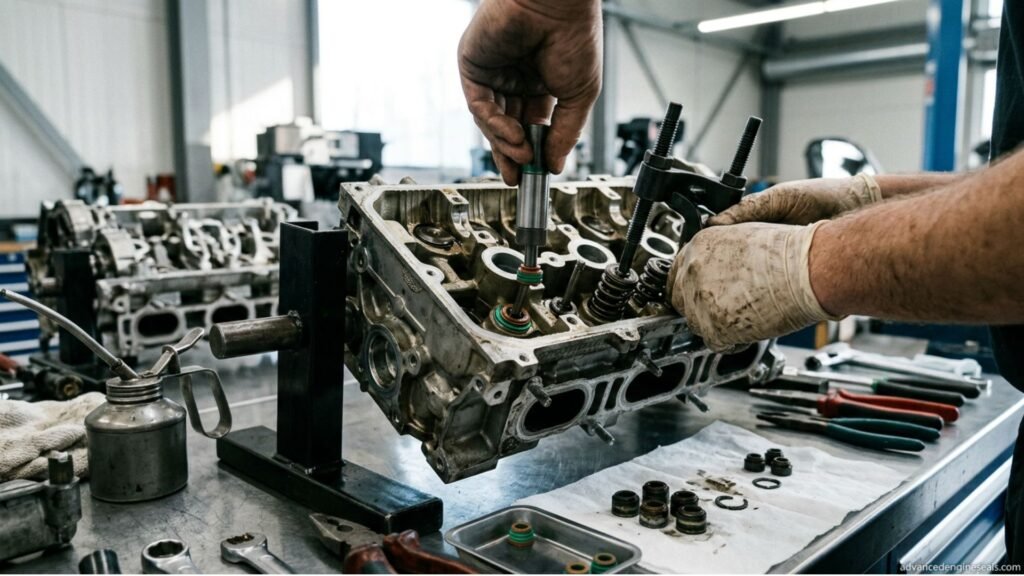
Inside your engine’s cylinder head, there are intake and exhaust valves that open and close thousands of times per minute to let the air-fuel mixture in and exhaust gases out. Each of these valves has a long thin stem that slides through a guide in the cylinder head. Engine oil lubricates these valve stems constantly to prevent wear — and valve stem seals are the small rubber or polymer seals that sit at the top of each valve guide to control how much oil reaches the valve stem.
Think of valve stem seals as gatekeepers. They let just enough oil through to lubricate the valve stem — but not so much that oil drips down into the combustion chamber and gets burned with the fuel. When valve stem seals are healthy and doing their job, you never think about them. When valve stem seals start to wear out or harden with age, oil sneaks past them and into the combustion chamber — and that is when the problems begin.
Valve stem seals are made from rubber, PTFE, or other polymer compounds that harden and crack with age and heat exposure. Most valve stem seals last 80,000 to 150,000 miles under normal conditions — but high operating temperatures, infrequent oil changes, and certain engine designs can shorten their service life significantly.
Valve Stem Seals Replacement Cost
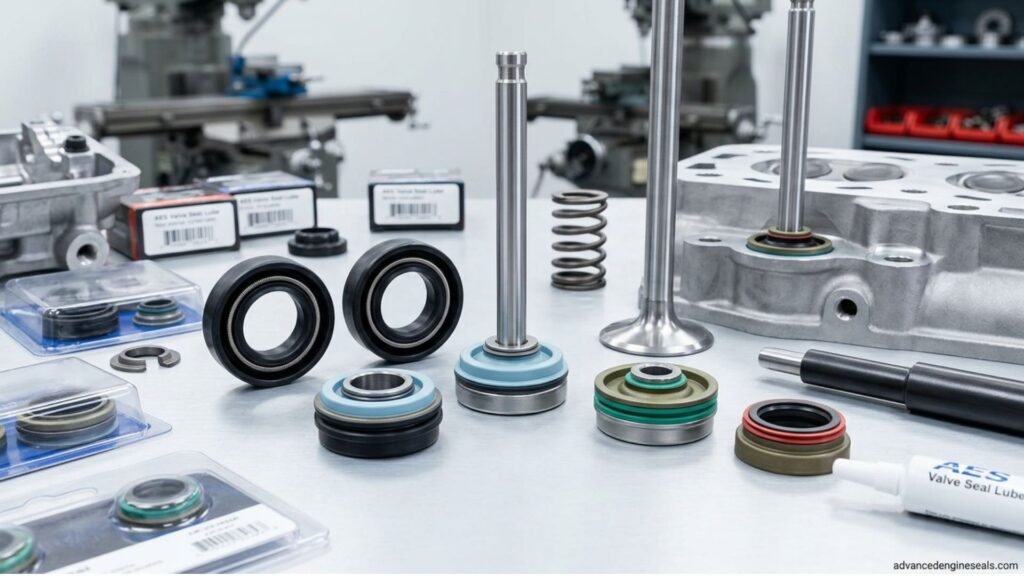
Let’s talk about money — because valve stem seals replacement cost is what most people want to know once they have the diagnosis. The honest answer is that valve stem seals replacement cost varies quite a bit depending on your specific engine, your location, and the shop you choose.
| Vehicle Type | Parts Cost | Labor Cost | Total Replacement Cost |
|---|---|---|---|
| 4-cylinder engine | $30 – $80 | $300 – $700 | $330 – $780 |
| V6 engine | $50 – $120 | $500 – $1,000 | $550 – $1,120 |
| V8 engine | $80 – $180 | $700 – $1,400 | $780 – $1,580 |
| European luxury vehicles | $100 – $300 | $800 – $2,000 | $900 – $2,300 |
| DIY (all engine types) | $30 – $180 | $0 | $30 – $180 |
The parts themselves for valve stem seals replacement are genuinely inexpensive — a complete set of valve stem seals for most engines costs $30 to $80. The labor is what drives up the valve stem seals replacement cost, because reaching the valve stem seals requires removing the cylinder head or at minimum using a special tool to keep the valves in place while the seals are swapped with the head still on the engine.
The signs of bad valve stem seals are actually quite distinctive once you know what to look for. The good news is that unlike some engine problems that are hard to pinpoint, worn valve stem seals tend to produce very specific symptoms that point directly to the diagnosis. Here are the most important signs of bad valve stem seals to watch for.
Always ask your mechanic upfront which method they plan to use for valve stem seals replacement and whether the cylinder head needs to come off. This single detail has the biggest impact on your total valve stem seals replacement cost.
1. Blue Smoke on Cold Start — The Clearest Sign
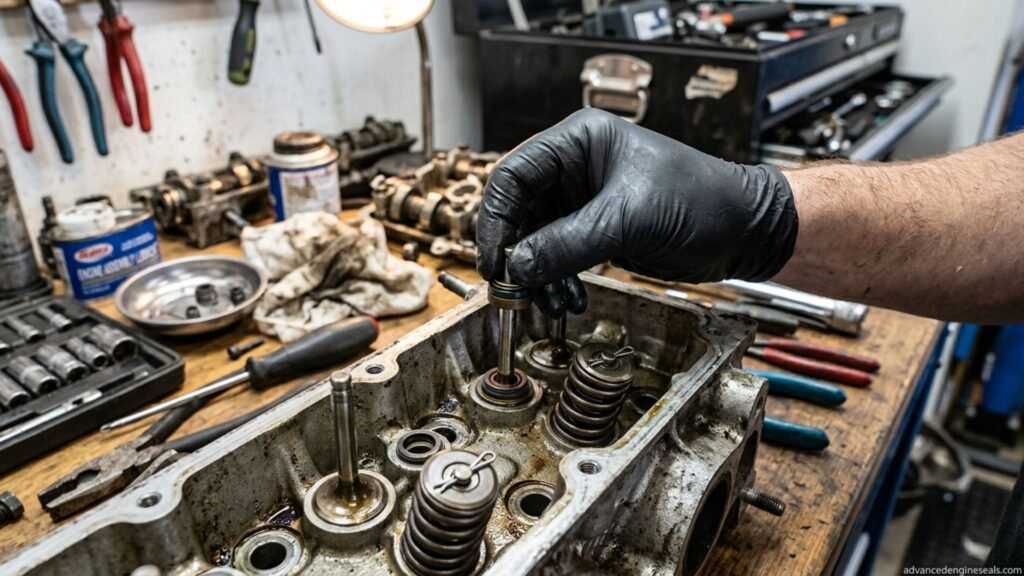
This is the most classic and reliable of all bad valve stem seals symptoms. When you start a cold engine after it has been sitting overnight, you see a puff of blue-gray smoke from the exhaust that lasts for 20 to 60 seconds and then clears up completely. That blue smoke is engine oil burning in the combustion chamber — and the reason it happens on startup specifically is that when the engine was sitting, oil gradually seeped past the worn valve stem seals and pooled in the combustion chambers. When you start the engine, all that pooled oil burns off at once, producing that distinctive blue cloud.
2. Blue Smoke on Deceleration
Another very specific pattern associated with bad valve stem seals symptoms is blue smoke that appears when you lift off the throttle after a period of high engine speed — such as coming off a highway on-ramp or decelerating from high speed. During deceleration with the throttle closed, manifold vacuum increases dramatically. This high vacuum pulls oil past the leaking valve stem seals on the intake side and into the combustion chambers. When you get back on the throttle, that oil burns and you see a brief burst of blue smoke.
3. Strong Smell of Burning Oil
If you frequently notice a strong burning oil smell from the engine bay — particularly after a cold start or after hard driving — leaking valve stem seals burning oil in the combustion chambers may be the source. This smell is produced by oil that bypasses the worn valve stem seals and burns on hot exhaust components or directly in the combustion chamber.
4. Failed Emissions Test
Vehicles with significantly worn valve stem seals burning oil regularly will produce elevated hydrocarbon emissions. If your car failed an emissions test without any other obvious cause, bad valve stem seals pushing oil into the combustion chamber and increasing unburned hydrocarbon output in the exhaust is a possibility worth investigating.
Important: the blue smoke on startup symptom specifically is very characteristic of worn valve stem seals — but blue smoke during normal driving or under load is more often associated with worn piston rings, which is a more serious and expensive problem. Getting the correct diagnosis before spending money on valve stem seals replacement is important.
Bad Valve Stem Seals Symptoms vs. Worn Piston Rings
Because both bad valve stem seals symptoms and worn piston ring symptoms involve oil consumption and blue smoke, it is important to tell them apart — because the repair costs are very different. Here is a quick comparison to help you figure out which problem you are dealing with.
| Symptom Pattern | Valve Stem Seals | Piston Rings |
|---|---|---|
| Blue smoke timing | On cold startup, clears after warmup | Throughout driving, especially under load |
| Deceleration smoke | Yes — very common | Less common |
| Oil consumption | Moderate | Often severe |
| Compression test result | Normal compression | Low compression |
| Engine power | Usually normal | Often noticeably reduced |
| Repair complexity | Moderate | Major engine rebuild |
| Repair cost | $400 – $1,500 | $1,500 – $4,000+ |
If a compression test on all cylinders comes back normal, that strongly points toward valve stem seals as the culprit rather than piston rings. A leak-down test can further confirm the diagnosis. This distinction matters enormously for your wallet — valve stem seals replacement is a much more manageable repair than a full engine rebuild for piston rings.
Valve Stem Seals Quick Fix — Does It Work?
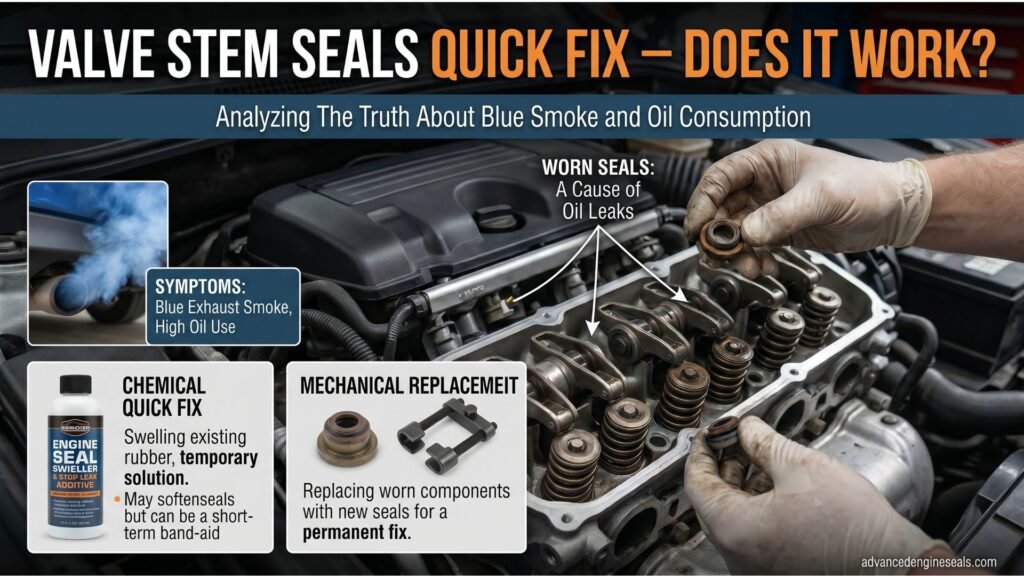
If you have searched around for solutions, you have probably come across the idea of a valve stem seals quick fix — usually a pour-in additive that claims to restore or recondition hardened valve stem seals without any mechanical work. So does a valve stem seals quick fix actually work?
The honest answer is: sometimes, yes — but with significant limitations you need to understand before spending money on it.
Products marketed as a valve stem seals quick fix typically work by conditioning the rubber compounds in the valve stem seals, causing them to swell slightly and conform better to the valve stem. If your valve stem seals have hardened and shrunk slightly from heat and age but are not physically cracked or broken, a quality valve stem seals quick fix product can genuinely reduce oil consumption and blue smoke. Some car owners report significant improvement after using one of these treatments.
When does a valve stem seals quick fix make sense?
- When the oil consumption is moderate and the car has relatively low remaining value
- When you want to manage the symptoms while budgeting for proper valve stem seals replacement
- When the valve stem seals symptoms are mild and caught early, before severe hardening has occurred
When should you skip the valve stem seals quick fix and go straight to replacement?
- When oil consumption is severe — more than a quart every 1,000 miles
- When the blue smoke is persistent throughout driving, not just on startup
- When spark plugs are fouling regularly from leaking valve stem seals
- When you want a permanent, reliable fix rather than a temporary measure
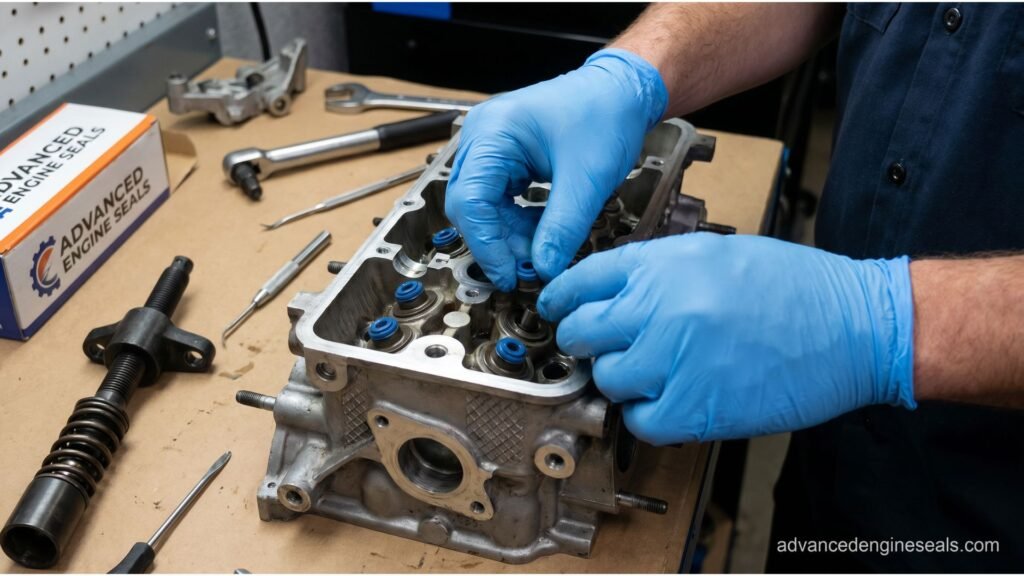
How to Replace Valve Stem Seals
Understanding how to replace valve stem seals helps you know what to expect from the repair — whether you are doing it yourself or taking it to a shop. Here is a clear overview of how the valve stem seals replacement process works.
Method 1 — With Cylinder Head Removal
This is the more thorough approach to how to replace valve stem seals and gives the best access and the most complete inspection. The process involves:
- Draining the coolant and removing the intake and exhaust manifolds
- Removing the timing belt or chain components to free the camshaft
- Unbolting and lifting the cylinder head off the engine
- Using a valve spring compressor tool to compress each spring, remove the keeper clips, and pull the old valve stem seals off
- Installing new valve stem seals with a seal driver tool to seat them correctly
- Reassembling everything in reverse order with new gaskets and properly torqued head bolts
DIY valve stem seals replacement is realistic for experienced home mechanics — but it requires specific tools including a valve spring compressor and seal driver. If you have not done engine valve work before, this is a job where the risk of making things worse is real. Getting a professional quote first is always a good idea.
Can You Drive with Worn Valve Stem Seals?
Unlike a blown head gasket where driving causes rapidly escalating damage, worn valve stem seals are generally not an immediate mechanical emergency. Many cars drive for tens of thousands of miles with leaking valve stem seals — burning a little oil, producing some blue startup smoke, but otherwise functioning normally.
That said, driving with worn valve stem seals for an extended period does carry real risks you should understand:
- Consistently low oil level from oil being burned past leaking valve stem seals can eventually lead to oil starvation and engine damage if you do not monitor and top up the oil regularly
- Fouled spark plugs from bad valve stem seals cause misfires that stress the catalytic converter — and catalytic converters are expensive to replace
- Oil burning from worn valve stem seals increases harmful exhaust emissions
- The leaking valve stem seals will not get better on their own — the oil consumption will gradually worsen over time
If you choose to drive with worn valve stem seals while you plan the repair, check your oil level at every fuel fill-up and top up as needed. Do not let the engine run low on oil waiting for a valve stem seals replacement appointment.
Will BMW Do Valve Stem Seals for Free on the BMW 550i?
If you own a BMW 550i and you are dealing with oil consumption and blue smoke, you are definitely not alone. The N63 engine used in the 550i has a well-documented history of premature valve stem seals failure — and BMW knows it.
BMW did respond to this problem by releasing a Customer Care Package specifically for N63-powered vehicles. This package covered valve stem seals replacement along with several other common N63 repairs completely free of charge. Many 550i owners got their valve stem seals replaced at no cost under this program.
The honest reality today is that the original Customer Care Package has expired for most vehicles. However, that does not mean you are completely out of options. If your 550i is still covered under a Certified Pre-Owned warranty or an active BMW extended service plan, valve stem seals work may still be covered. Some BMW dealers have also shown goodwill toward well-maintained vehicles even after the official program ended — especially when the owner has a full service history with a BMW dealer.
The best move is to call your local BMW dealer, give them your VIN, and ask directly about any remaining N63 coverage or goodwill assistance. Always get any commitment in writing before authorizing the repair.
Bottom line — it is absolutely worth asking before you pay out of pocket.
Will BMW do valve stem seals for free on the BMW 550i?
This is one of the most searched valve stem seals questions among BMW 550i owners — and for good reason. The BMW N63 engine used in the 550i, 650i, and X5 50i models is well known for premature valve stem seals failure, often occurring well before 100,000 miles. BMW did acknowledge this issue and issued a Customer Care Package (CCP) that covered valve stem seals replacement and several other N63-related repairs at no charge to the owner.
However, whether BMW will still do valve stem seals for free on your specific 550i depends on several important factors:
The original Customer Care Package coverage has expired for most 550i vehicles — it was time and mileage limited
If your 550i is still within an active extended warranty or a newer BMW extended service package, valve stem seals work may still be covered
Some BMW dealers have shown goodwill for well-documented, properly maintained vehicles even outside the official CCP window — it is always worth asking
If you purchased a Certified Pre-Owned BMW 550i, the CPO warranty may still cover valve stem seals replacement
Call your local BMW dealer, provide your VIN, and specifically ask about any remaining Customer Care Package coverage or goodwill assistance for N63 valve stem seals. Always get any coverage confirmation in writing before authorizing work.
What are valve stem seals?
Valve stem seals are small but critically important rubber or polymer seals that sit at the top of each valve guide in your engine’s cylinder head. Every intake and exhaust valve in your engine has a long thin stem that slides through a guide — and the valve stem seal controls how much engine oil reaches that stem for lubrication.
Think of valve stem seals as precision gatekeepers. They allow just enough oil to lubricate each valve stem without letting excess oil drip down into the combustion chamber where it would burn with the fuel. A healthy set of valve stem seals keeps this balance perfect — you never think about them. When valve stem seals harden, crack, or wear out with age, oil slips past them into the combustion chamber, causing blue smoke, oil consumption, and fouled spark plugs.
Most engines have two valve stem seals per cylinder — one for the intake valve and one for the exhaust valve. A standard 4-cylinder engine has 8 valve stem seals total, a V6 has 12, and a V8 has 16. They are made from rubber, PTFE, or fluorocarbon compounds and typically last 80,000 to 150,000 miles under normal conditions.
How do you install valve stem seals?
Installing valve stem seals correctly requires specific tools and careful technique. Here is how to install valve stem seals step by step using the compressed air method — the most common approach that avoids full cylinder head removal:
Remove the valve cover and camshaft components to expose the valve springs and retainers
Rotate the engine to bring the piston in the first cylinder to top dead center so the valves are fully closed
Thread a compressed air adapter into the spark plug hole and connect it to your air compressor — this holds the valves closed while you work
Use a valve spring compressor tool to compress the valve spring, then remove the small keeper clips (cotters) using a magnet or tweezers
Lift off the spring retainer and spring, then use valve stem seal pliers or a removal tool to pull the old valve stem seal straight off the valve guide
Lubricate the new valve stem seal lightly with clean engine oil, then use a valve stem seal installation tool to tap it straight down onto the valve guide until fully seated — never hammer directly on the seal
Reinstall the spring, retainer, and keepers, then release the air pressure and move to the next cylinder
Never install valve stem seals without the proper seal driver tool — pushing them on by hand or with a socket can crack or deform the seal and cause an immediate leak. The correct installation tool ensures the seal seats squarely and fully every time.
How do you replace valve stem seals?
To replace valve stem seals, mechanics use one of two methods depending on the engine design and the shop’s preference:
Method 1 — Cylinder Head Removal: The most thorough way to replace valve stem seals. The mechanic removes the cylinder head completely, which gives full access to every valve stem seal on a workbench. This method is best when the head gasket also needs replacing or when the cylinder head needs inspection and resurfacing at the same time. It takes longer but produces the most reliable result.
Method 2 — In-Situ with Compressed Air: A faster way to replace valve stem seals that keeps the cylinder head on the engine. Compressed air is fed into each cylinder through the spark plug hole to hold the valves closed, then a valve spring compressor is used to access and replace each valve stem seal one at a time. This method can replace valve stem seals in 4 to 6 hours on accessible engines versus 8 to 12 hours for full head removal — making it significantly cheaper on labor.
When you replace valve stem seals, always replace the complete set across all cylinders at the same time — not just the ones showing obvious symptoms. All the seals age at the same rate, so if some have failed, the rest are close behind.
How do you change valve stem seals without removing the head?
Changing valve stem seals without removing the head is entirely possible on most engines using the compressed air method. Here is exactly how to change valve stem seals with the head in place:
Remove the valve cover, cam sprockets, and any components blocking access to the valve springs
Rotate the crankshaft to bring the target cylinder’s piston to top dead center — this is essential before you change valve stem seals on that cylinder
Install a compressed air fitting in the spark plug hole and maintain steady air pressure throughout the process to keep the valves held closed
Compress the valve spring with a valve spring compressor tool designed for use with the head on
Remove the keepers, lift the retainer and spring, then pull the old valve stem seal off using seal removal pliers
Install the new valve stem seal using the correct seal driver — tap it gently and evenly onto the valve guide until it seats fully
Reassemble the spring, retainer, and keepers before moving to the next valve
The key to successfully changing valve stem seals without removing the head is maintaining consistent air pressure throughout. If pressure drops while a spring is removed, a valve can fall into the cylinder — which then requires pulling the head to retrieve it. Make sure your compressor maintains steady pressure before you begin changing valve stem seals using this method.
Before changing valve stem seals this way, watch a tutorial specific to your engine model — the location of the cam timing marks and the accessibility of the valve springs vary significantly between engines.
