Rear Main Seal Replacement: Symptoms, Cost & Repair Guide (2026)
There is a specific kind of dread that hits a car owner when they walk into the garage on a Monday morning and find a fresh, dark puddle of oil sitting on the concrete. If that puddle is located toward the back of the engine—right where the engine meets the transmission—you aren’t just looking at a simple mess. You are likely staring down the barrel of a failing rear main seal.
The rear main seal is one of those “silent” components. It doesn’t make noise, it doesn’t vibrate, and it doesn’t cause your car to stall. It simply sits there, doing the invisible, vital job of keeping your engine’s lifeblood contained. But when that seal fails, the repair is notoriously labor-intensive, making rear main seal replacement one of the most dreaded service items in the shop.
In this guide, we are going to break down exactly what this part does, how to tell if it’s actually the culprit, what you can expect to pay, and whether you should attempt the fix yourself or call in a professional.
What Exactly is a Rear Main Seal?
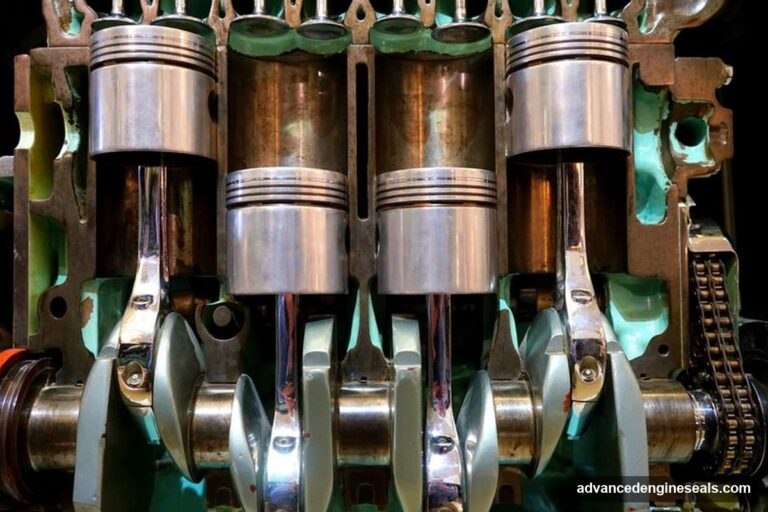
To understand why this repair is such a headache, you first have to understand the part’s location. Every internal combustion engine has a crankshaft that rotates to convert the linear motion of the pistons into rotational energy. This crankshaft must exit the engine block to connect to the transmission—either via a flywheel in manual cars or a torque converter in automatics.
Because the crankshaft is spinning at thousands of revolutions per minute, you cannot simply “plug” the hole where it exits the engine. You need a dynamic seal. Unlike a static gasket (which just sits between two flat surfaces), a dynamic seal has to maintain a tight, constant grip on a moving, spinning surface while resisting extreme heat and high pressure. That is the rear main seal.
It is positioned at the very rear of the engine block. Unlike a valve cover gasket, which sits on top of the engine and is easily accessible, the rear main seal is tucked away behind the bell housing of the transmission. This physical location is the primary reason why the labor costs for this repair are so high. You can’t just reach in and swap it; you have to take the whole transmission out of the way first.
Identifying the Problem: Rear Main Seal Symptoms
A leaking seal won’t suddenly cause your engine to explode, but it will lead to a slow, steady decline in oil pressure and engine cleanliness. Recognizing the rear main seal symptoms early can save you from much more expensive secondary damage.
1. The “Rear-End” Oil Puddle
The most obvious sign is an oil leak that appears to be coming from the junction where the engine and transmission meet. If you look under your car and see oil dripping specifically from the back side of the engine block, the rear main seal is the prime suspect.
2. Burning Oil Smell
As the oil escapes the seal, it often lands on the hot exhaust manifold or the hot surface of the transmission bell housing. This creates a distinct, acrid burning smell that becomes more noticeable when you are idling at a stoplight or driving at high speeds. If you smell “toasted” oil, your seal might be losing the battle.
3. Decreasing Oil Levels
If you find yourself topping off your oil every few weeks, you have a leak. While this could be a simple oil pan gasket or a valve cover leak, a steady drop in oil level without visible leaks at the top of the engine often points to a leaking rear main seal.
4. Clutch Slippage (Manual Transmissions Only)
This is a critical symptom for manual drivers. If the rear main seal fails, oil can spray onto the clutch disc. Since oil is a lubricant, it reduces the friction required for the clutch to grab. If you notice your RPMs rising while your vehicle speed stays the same during acceleration, your leaking seal may have already contaminated your clutch.
How to Diagnose: Is It Actually the Rear Main Seal?
It is very common for folks to misdiagnose an oil leak. Because oil travels downward due to gravity, a leak from a high point (like a valve cover) can run down the engine and look like it’s coming from the rear main seal.
To perform a proper diagnosis, I always recommend the “flashlight and wipe” method:
1. Degrease the engine: Use a heavy-duty engine degreaser to clean the area between the engine and the transmission.
2. Dry the area: Use compressed air or clean rags to ensure the bell housing is bone dry.
3. The Flashlight Test: Drive the car for a short distance, then immediately inspect the area with a bright LED flashlight. Look specifically at the seam where the engine block meets the transmission. If the oil is seeping from the center of that seam, you have confirmed a crankshaft seal replacement is necessary.
Pro tip: Before assuming the worst, always check your oil pan gasket and your oil filter first. It is much easier (and cheaper) to replace an oil pan gasket than a rear main seal.
The Repair Dilemma: DIY vs. Professional
This is perhaps the most important decision you will make regarding this repair.
The DIY Route
If you are a seasoned mechanic with a full set of professional tools—including a high-quality transmission jack, a torque wrench, and an engine support bar—a rear main seal replacement is doable. However, it is not a “weekend project” for a beginner.
Pros:
* Massive savings on labor costs.
* Total control over the quality of parts used.
Cons:
* Extremely high risk of error. If you damage the crankshaft surface or install the seal backward, you will have to do the entire job all over again.
* Requires specialized tools for transmission removal and seal installation.
The Professional Route
For 90% of vehicle owners, taking the car to a reputable shop is the smarter move.
Pros:
* Guaranteed workmanship (most shops offer a warranty on labor).
* Proper equipment for heavy lifting and precision installation.
* They will also inspect related components (like the torque converter or flywheel) while everything is apart.
Cons:
* Significant financial investment.
Cost Breakdown
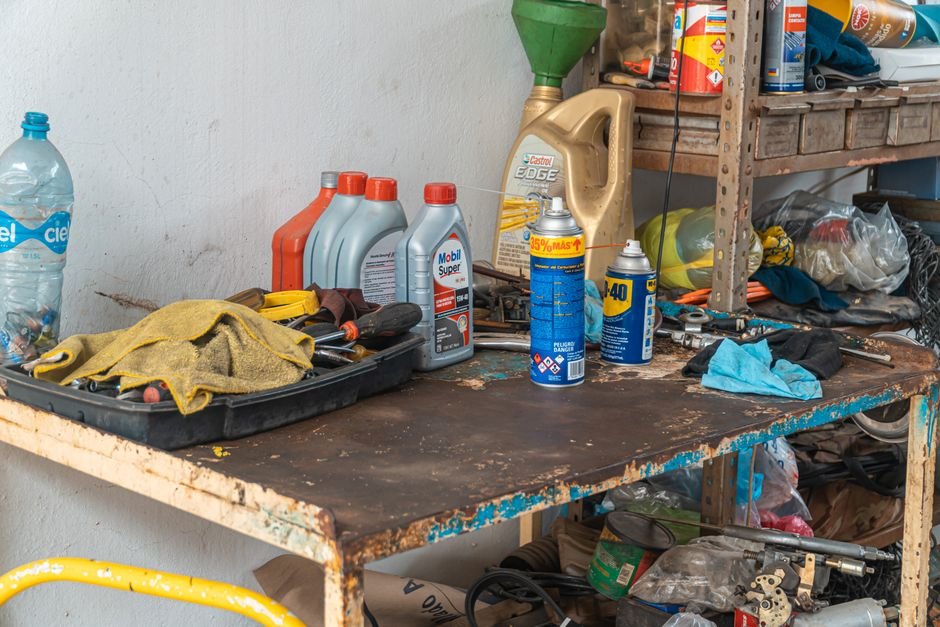
When people search for rear main seal repair cost, they are often shocked by the numbers. This is because the cost of the part itself is negligible (usually under $50), while the labor is massive. In almost every vehicle, the transmission must be completely removed to access the seal.
The following table provides a realistic estimate of what you might encounter in a professional shop.
| Service Type | Estimated Parts Cost | Estimated Labor Cost | Total Estimated Cost |
|---|---|---|---|
| DIY (Basic Seal Only) | $20 – $60 | $0 (Your time!) | $20 – $60 |
| Professional (Standard Vehicle) | $50 – $120 | $500 – $1,200 | $550 – $1,320 |
| Professional (Truck/Large SUV) | $80 – $180 | $800 – $1,800 | $880 – $1,980+ |
| Professional (Performance/Exotic) | $150 – $400 | $1,500 – $3,500+ | $1,650 – $3,900+ |
Note: Prices vary significantly based on your geographic location and the specific make/model of your vehicle. Always get a written estimate from an ASE certified mechanic.
Top Recommended Brands & Products
When you are buying a seal, do not buy the cheapest “no-name” part you find on a generic marketplace. The rear main seal is a high-stress component; a failure here means you’re back to square one. Stick to brands that engineers trust.
Fel-Pro Rear Main Seals
- Key Material / Technology: High-grade Nitrile or Viton elastomers.
- Why It Stands Out / Best Application: Fel-Pro is the industry standard for a reason. Their seals are engineered to match or exceed OEM specifications and are specifically designed to handle modern synthetic oils and high-heat environments.
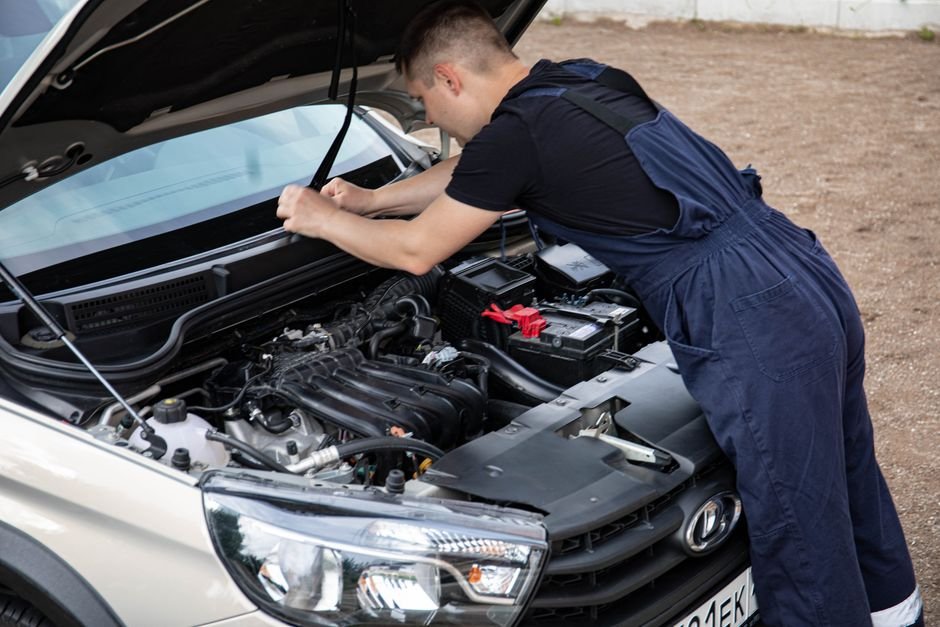
A dark oil puddle on a garage floor underneath the rear of a car engine
Victor Reinz Seals
- Key Material / Technology: Advanced polymer construction.
- Why It Stands Out / Best Application: Often preferred for European vehicles (BMW, VW, Mercedes), Victor Reinz provides incredible sealing integrity and is frequently used as an OE (Original Equipment) supplier.
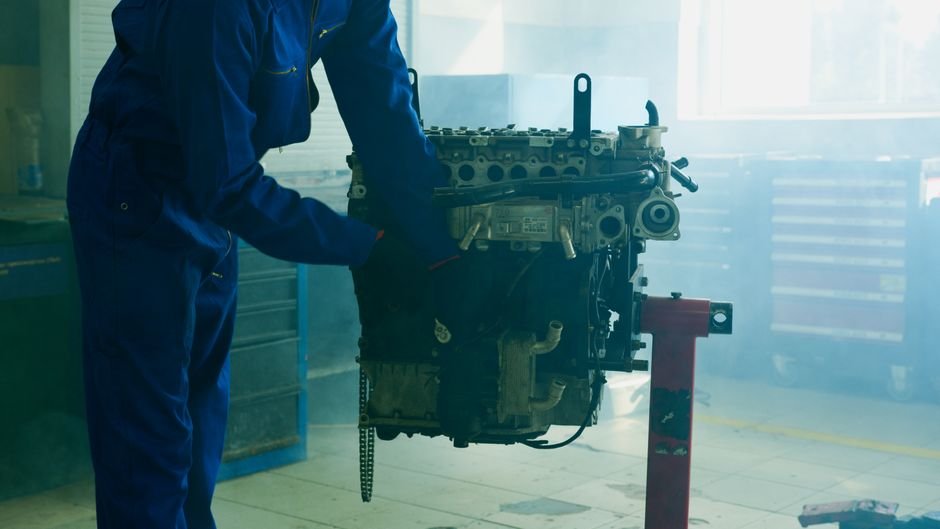
A mechanic using an LED flashlight to inspect an engine oil leak at the transmission junction
SKF Engine Seals
- Key Material / Technology: Precision-engineered lip technology.
- Why It Stands Out / Best Application: SKF is a world leader in bearing and seal technology. If you are dealing with a high-performance or high-mileage engine, their precision-manufactured seals offer excellent longevity.
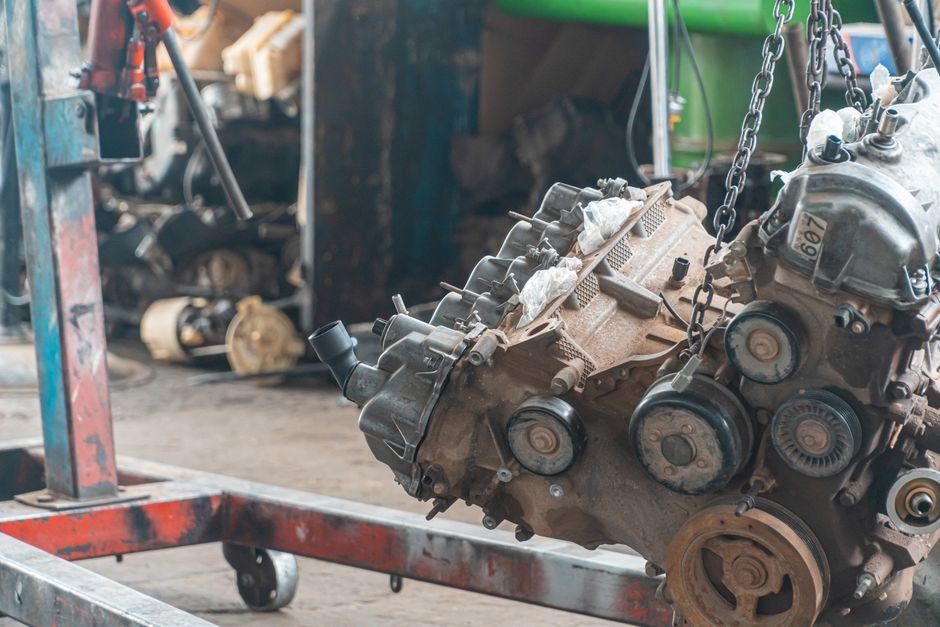
A professional mechanic using a transmission jack to separate the transmission from the engine block
Pro Tips for Installation
If you have assessed your skills and decided to tackle this job yourself, keep these three “Golden Rules” in mind to ensure you don’t have to do the job twice:
- Cleanliness is Everything: Even a single grain of sand or a tiny burr on the crankshaft surface can cause the new seal to leak immediately. Use a lint-free cloth and specialized cleaning solvent to ensure the mating surface is surgically clean.
- Check for Crankshaft Wear: Before installing the new seal, inspect the crankshaft itself. If the metal surface where the seal sits is scored, grooved, or pitted, a new seal will not stop the leak. In this case, you may need a “speedi-sleeve” or a crankshaft machining job.
- Never “Force” the Seal: Use a dedicated seal driver tool to press the seal into place. If you use a hammer and a screwdriver, you risk cocking the seal at an angle. A crooked seal is a leaking seal.
FAQ
Can I drive with a leaking rear main seal?
Yes, you can, provided the leak is a “seep” rather than a “drip.” If the oil level is staying within the safe operating range on your dipstick and you don’t notice a massive puddle under the car, it is not an immediate emergency. However, you should monitor it closely. If the leak becomes heavy, it can lead to oil starvation, which will destroy your engine in seconds.
Is it a rear main seal or an oil pan gasket?
This is the most common point of confusion. The easiest way to tell is location. An oil pan gasket leaks from the very bottom of the engine. A rear main seal leaks from the area where the engine meets the transmission. If you see oil dripping from the middle of the engine block, it’s likely the seal.
Why is rear main seal replacement so expensive?
The cost isn’t in the part; it’s in the “access.” To reach the seal, a mechanic has to drain the fluids, unbolt the driveshaft (on RWD cars), remove the transmission, and pull the bell housing away from the engine. This can take anywhere from 4 to 10 hours of labor depending on the vehicle.
Do I need to replace the transmission too?
No, you do not need to replace the transmission. However, while the transmission is out of the car, it is the perfect time to inspect the torque converter (for automatics) or the clutch and pressure plate (for manuals). If those components are worn, you can save a massive amount of money by replacing them while the labor for the transmission removal is already “paid for.”
Can RTV silicone fix a rear main seal?
No. RTV silicone is used for many gaskets (like oil pans or valve covers), but it cannot be used to “fix” a rotating crankshaft seal. The rear main seal is a mechanical component that relies on a tight, physical lip against a spinning shaft. Applying sealant around the outside of a failed seal will not stop the internal pressure from forcing oil past the lip.
How long does a new rear main seal last?
A high-quality seal from a brand like Fel-Pro or Victor Reinz should last for the remainder of the vehicle’s life, provided the engine is well-maintained. Most seals fail due to age (the rubber becomes brittle over 100,000+ miles) or due to extreme heat cycles.
{
  "title": "Rear Main Seal Replacement: Symptoms, Cost & Repair Guide (2026)",
  "description": "Learn about rear main seal replacement, including symptoms of a leaking seal, repair costs, DIY vs professional advice, and top recommended brands.",
  "keywords": [
    "Rear main seal replacement",
    "rear main seal symptoms",
    "leaking rear main seal",
    "rear main seal repair cost",
    "engine oil leak from back of engine",
    "crankshaft seal replacement"
  ],
  "author": "Master Mechanic",
  "date": "2026-01-01",
  "article_type": "Repair Guide"
}

One Comment