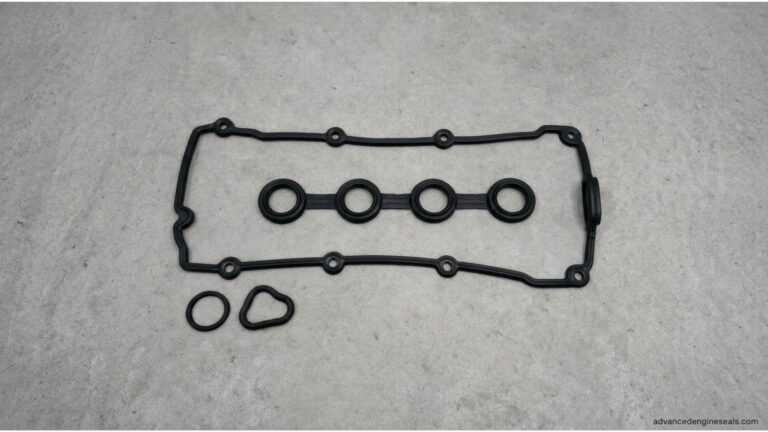
Intake Manifold Gasket Symptoms: How to Identify, Diagnose & Fix a Leak (2026)
Intake Manifold Gasket Symptoms: How to Identify, Diagnose & Fix a Leak (2026)
Is your car acting a little… twitchy? Maybe you’re sitting at a red light and you notice the engine stumbling, like it’s about to die, even though your foot is steady on the brake. Or perhaps you hear a strange, high-pitched whistling or hissing sound coming from under the hood when you’re idling.
If any of that sounds familiar, you might be dealing with a failing intake manifold gasket.
Now, I know what you’re thinking. “A gasket? Isn’t that just a little piece of paper or rubber?” Well, it’s a lot more important than that. In my years under the hood, I’ve seen plenty of folks ignore these little signs, only to end up with a massive repair bill later because a small air leak turned into a melted piston or a burnt valve. An intake manifold gasket failure is one of those “fix it now before it breaks something else” situations.
In this guide, I’m going to walk you through the most common Intake Manifold Gasket Symptoms, show you how to figure out if that’s really what’s wrong, and give you the lowdown on how to fix it yourself.
What is an Intake Manifold Gasket?
To understand why your engine is acting up, you have to understand what this part actually does. Think of your engine like a person breathing. To stay alive, it needs a very specific mix of air and fuel. The intake manifold is essentially the “lungs” of your engine. It’s a series of tubes that carries air into the cylinders so they can burn that fuel and create power.
The gasket is the seal that sits right between that manifold and the engine’s cylinder head. Its one and only job is to make sure that the only air entering the engine is the air that was measured by your sensors.
When that gasket fails—whether it’s cracked, crushed, or burnt—it creates what we call a “vacuum leak.” This allows “unmetered air” to sneak into the engine through the gap. This extra air confuses the engine’s computer (the ECU) because it didn’t account for it. The computer thinks there’s more air than there actually is, so it tries to adjust, but it can’t quite get the mix right. This results in a “lean” condition, meaning you have too much air and not enough fuel.
Pro tip: Running an engine “lean” is dangerous. Too much air and not enough fuel makes the combustion temperature skyrocket. This extra heat can eventually damage your valves and even your pistons. Don’t ignore a lean code!
Identifying the Top Intake Manifold Gasket Symptoms
Because a leak messes with the air-fuel ratio, the symptoms usually show up when the engine is struggling to maintain a steady rhythm. Here are the big ones to watch out for.
1. Rough or Unstable Idle
This is the number one sign I see in the shop. When you’re stopped at a light, the engine is at its lowest RPM. At this speed, the engine needs a very precise, tiny amount of air to stay running smoothly. If there’s a leak in the gasket, that extra, unmetered air enters the system and throws the whole balance off. You’ll see your RPM needle bouncing up and down, or you’ll feel the car shuddering as if it’s about to stall out.
2. Check Engine Light (P0171 and P0174 Codes)
If your dashboard lights up like a Christmas tree, grab a scanner. If you see codes like P0171 (System Too Lean, Bank 1) or P0174 (System Too Lean, Bank 2), you’ve got a smoking gun. These codes are the car’s way of telling you, “Hey, I’m seeing way more oxygen in the exhaust than I expected.” In most cases, that extra oxygen is coming from a leak in the intake manifold gasket.
3. Engine Misfires
When the air-fuel mixture gets too thin (too much air, not enough gas), the spark plug sometimes can’t get that mixture to ignite properly. This causes a misfire. You’ll feel it as a rhythmic “hiccup” or a jerkiness while you’re driving, especially when you’re trying to accelerate from a stop.
4. Loss of Power and Hesitation
If the leak is pretty significant, you’re going to notice your car feels “sluggish.” When you step on the gas, instead of the engine responding immediately, it might hesitate or “bog down” for a second. It feels like the engine is choking because it can’t get the right mixture to produce the power you’re asking for.
5. The “Hissing” Sound
Sometimes, you don’t even need a computer to tell you something is wrong; you just need to listen. Because the engine is under vacuum, air is being sucked through that tiny gap in the gasket with quite a bit of force. This often creates a noticeable hissing or whistling sound coming from the engine bay, especially when the engine is idling.
How to Diagnose an Intake Manifold Gasket Leak
Before you go out and buy a whole new manifold or start tearing things apart, you need to be 100% sure the gasket is the problem. I’ve seen people replace perfectly good sensors when the real issue was just a $30 gasket.
The “Spray Test” (The DIY Method)
If you want to do a quick check at home, you can use the “spray test.” You’ll need some non-flammable carburetor cleaner or even just a spray bottle with soapy water.
1. Start the engine and let it idle.
2. Carefully spray a light mist of the cleaner around the edges where the intake manifold meets the engine block.
3. Watch the RPMs. If the engine’s idle suddenly changes—if it smooths out or, more likely, if it jumps up or stumbles—you’ve found your leak. The engine is literally “inhaling” the spray through the hole in the gasket.
4. Safety First: Be extremely careful. Carb cleaner is flammable, and you’re working near a hot engine. Use it sparingly and follow all safety precautions.
The Smoke Test (The Professional Method)
If you want to be absolutely certain, you need a smoke machine. This is what we use in the shop. We find a way to inject thick, non-toxic smoke into the intake system while the engine is off. Then, we just look for where the smoke is escaping. If smoke is puffing out from under the manifold, you know exactly where the leak is. This is much more accurate than the spray test because it can find tiny, microscopic cracks that a spray might miss.
OBD-II Data Analysis
If you have a decent-quality OBD-II scanner, don’t just look at the codes; look at the “Live Data.” Look for your Short Term Fuel Trims (STFT) and Long Term Fuel Trims (LTFT).
* If your fuel trims are high (meaning the computer is adding a lot of extra fuel to compensate for too much air), you have a lean condition.
* Here is the secret trick: If the fuel trims are really high at idle but they get much closer to zero when you rev the engine up to about 2,500 RPM, you almost certainly have a vacuum leak. This is because, at higher speeds, the amount of air being sucked in through the leak is tiny compared to the massive amount of air the engine is pulling in through the main intake.
Common Causes of Gasket Failure
Gaskets don’t usually just “decide” to fail. There is almost always a reason behind it.
- Heat and Age: This is the big one. Your engine goes through “thermal cycling”—it gets incredibly hot while you’re driving and then cools down when you park. Over years of this, the gasket material gets brittle, hard, or even cracked. It simply loses its ability to stay soft and seal tight.
- Manifold Warpage: This is a sneaky one. If your engine has ever overheated, the metal (or sometimes the plastic) of the intake manifold itself might have warped. If the manifold isn’t perfectly flat, a new gasket won’t help; it’ll never be able to make a complete seal.
- Improper Torque: If someone worked on your engine recently and didn’t tighten the manifold bolts in the right order or to the right tightness, the gasket can get crushed unevenly. This creates gaps that lead to leaks.
- Debris and Contamination: Sometimes, old oil or coolant can seep into the gasket material, causing it to swell or degrade over time.
Intake Manifold Gasket Replacement: A High-Level Guide
If you’ve confirmed the leak, it’s time for the fix. This is a “medium” difficulty job. It’s not as easy as changing your oil, but it’s definitely doable for a determined DIYer.
Essential Tools & Supplies
- A good socket set and various extensions
- A torque wrench (Don’t even think about doing this without one!)
- A plastic scraper (Avoid metal scrapers if you have an aluminum manifold, as you can scratch the surface)
- The new gasket set
- Brake cleaner (for cleaning the surfaces)
- A service manual for your specific vehicle
The Replacement Process
- Prep the Area: Disconnect the battery. This is non-negotiable. Then, you’ll need to remove everything that’s in the way—air intake hoses, vacuum lines, fuel rails, and any electrical connectors attached to the manifold.
- Remove the Manifold: Loosen the bolts holding the manifold down. Important: Always loosen them in the reverse order of how they were tightened. This prevents putting uneven stress on the manifold, which can cause it to crack.
- The Most Important Step: Cleaning: Once the manifold is off, you’ll see the old gasket. It might be stuck in the grooves or even crumbled. You need to get those surfaces perfectly clean. Use your scraper and some brake cleaner to ensure the cylinder head and the manifold are as smooth and clean as a mirror. If there is even a tiny speck of old gasket left, your new one won’t seal, and you’ll be right back where you started.
- Inspect for Warpage: Before putting the new one on, take a straightedge and a feeler gauge and check the flatness of the manifold. If it’s warped, you need to replace the manifold, not just the gasket.
- Install the New Gasket: Carefully place the new gasket onto the manifold. Be very careful not to get any oil or grease on the sealing surfaces.
- Torque it Down: Reinstall the manifold. Now, listen closely: You must use a torque wrench. You cannot “feel” how tight these bolts should be. You must follow the specific torque sequence provided in your service manual—usually, this means tightening from the center bolts and working your way out in a criss-cross pattern. This ensures the manifold is pressed down evenly.
| Task Phase | Estimated DIY Time | Difficulty Level | Common Pitfall |
|---|---|---|---|
| Diagnosis | 30 – 60 Mins | Low | Misidentifying the leak source |
| Disassembly | 1 – 3 Hours | Moderate | Breaking plastic clips or vacuum lines |
| Cleaning | 30 – 45 Mins | Moderate | Leaving old gasket residue behind |
| Reassembly | 1 – 2 Hours | High | Incorrect torque or sequence |
| Total Project | 3 – 7 Hours | Moderate | Skipping the torque wrench |
Top Recommended Replacement Brands & Products
When you’re buying a gasket, don’t go for the cheapest option you find on a random website. A bad gasket is a waste of your time and your tools. Stick to the names that pros trust.
### Fel-Pro Gasket Sets
- Why we like them: Fel-Pro is basically the gold standard for the everyday driver. They use advanced materials like Multi-Layer Steel (MLS) that are designed to handle the heat and pressure of modern engines perfectly. They are highly reliable and easy to find.
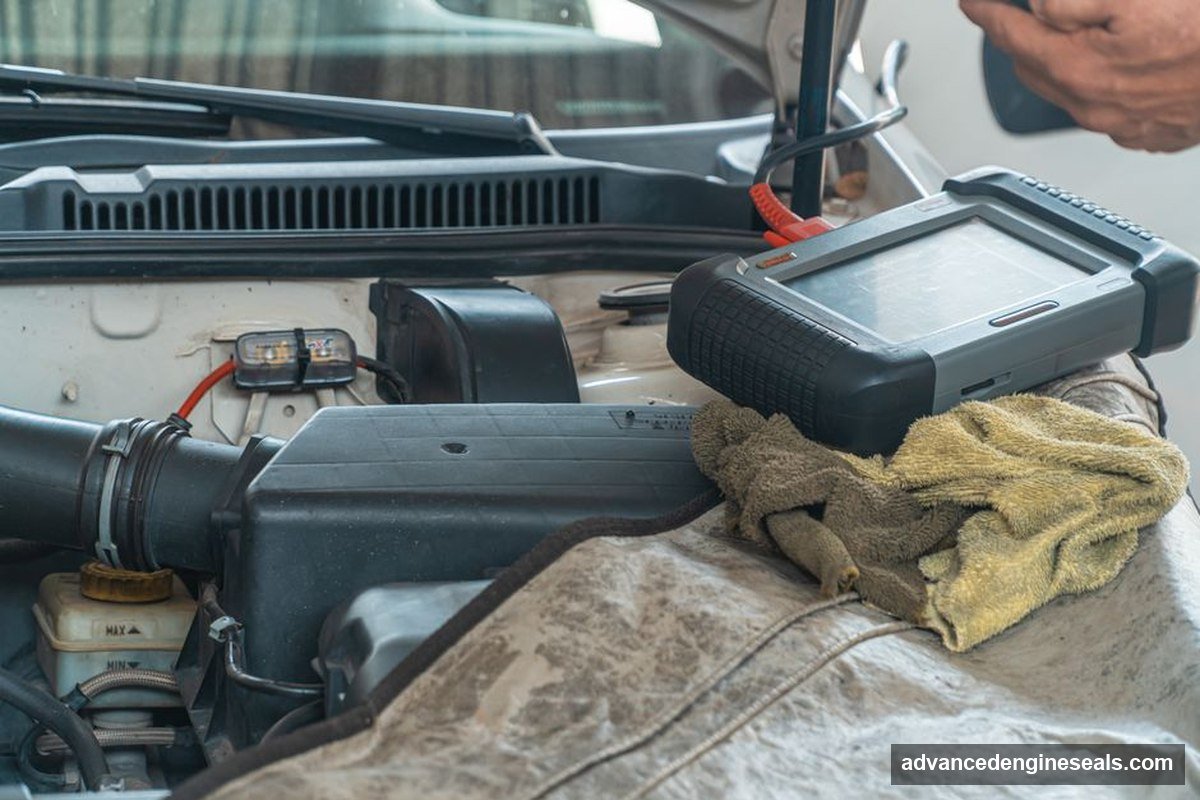
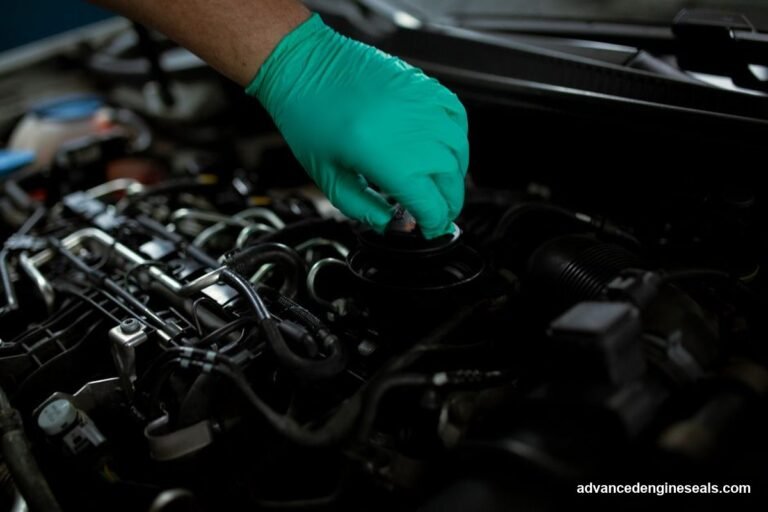
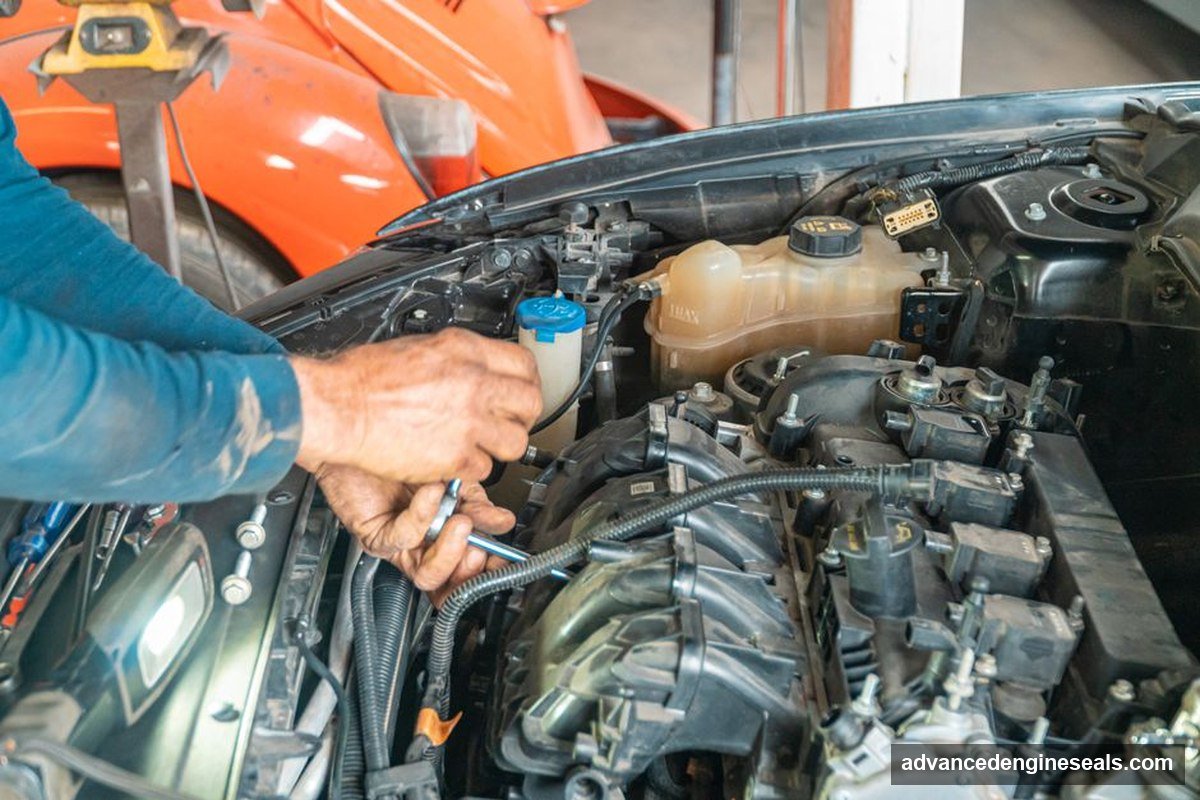
Inspecting engine for Intake Manifold Gasket Symptom
Victor Reinz
- Why we like them: If you’re working on a European car or a high-performance engine, Victor Reinz is a fantastic choice. Their gaskets are often made with specialized silicone-coated materials that provide an incredibly tight seal under extreme conditions.

High performance seal and Intake Manifold Gasket Symptoms
OEM (Original Equipment Manufacturer)
- Why we like them: If you want to do it exactly the way the factory did, go to the dealership and buy the genuine part. It’s usually the most expensive route, but you can’t beat the peace of mind of knowing it’s the exact part your engine was designed for.
Torque tightening during Intake Manifold Gasket Symptoms repair
Frequently Asked Questions
Can I just use RTV silicone to fix a leaking gasket?
I get asked this all the time. The short answer is: No. You can use a tiny bit of RTV in specific “corner notches” if the manufacturer’s instructions say so, but you cannot use it as a substitute for the gasket itself. If you use too much, the excess will squeeze out into the intake runners and get sucked into your engine, which can cause massive damage.
How much does it cost to replace an intake manifold gasket?
If you’re doing the work yourself, you’re looking at $25 to $80 for the parts. If you take it to a shop, expect to pay anywhere from $350 to $800. The bulk of that cost is the labor, because it takes a decent amount of time to strip down the top of the engine to get to that gasket.
Will a leaking gasket cause my car to fail an emissions test?
Yes. Most modern emissions tests look at your car’s computer data. If your “Check Engine” light is on because of a P0171 or P0174 lean code, you’re going to fail. Plus, the incorrect air-fuel ratio prevents your catalytic converter from working the way it’s supposed to.
Is an intake manifold gasket the same as a head gasket?
They are different. An intake manifold gasket seals the air intake to the top of the engine. A head gasket seals the cylinder head to the engine block. While they both deal with sealing, the head gasket handles much higher pressures and much more heat. Don’t confuse the two!
Can a vacuum leak be caused by something other than the gasket?
Yes, it can. Cracked vacuum hoses, a bad PCV valve, or even a leaking brake booster can all cause vacuum leaks. This is why the diagnosis step is so important—you want to make sure you’re fixing the right thing.
Can I drive with a leaking intake manifold gasket?
You can, but you shouldn’t. As I mentioned earlier, running “lean” makes your engine run much hotter than it should. If you keep driving like that, you’re risking much more expensive repairs down the road. It’s better to fix it now while it’s just a gasket.
Disclaimer: I’m a mechanic, but I’m not your mechanic. Automotive repair involves risks. Always consult your vehicle’s specific service manual and follow all safety protocols. If you aren’t comfortable doing this yourself, please take it to a certified professional.
{
  "title": "Intake Manifold Gasket Symptoms: How to Identify, Diagnose & Fix a Leak (2026)",
  "description": "Learn how to identify intake manifold gasket symptoms like rough idle, misfires, and P0171/P0174 codes. Our expert guide covers diagnosis and DIY repair.",
  "keywords": "Intake Manifold Gasket Symptoms, Intake Manifold Gasket Leak, vacuum leak symptoms, P0171 code, engine misfire, how to fix intake manifold gasket",
  "author": "Senior Automotive Technical Writer",
  "category": "Automotive Repair",
  "target_audience": "DIY Mechanics & Car Owners"
}