Front Crankshaft Seal Leak: Symptoms, Diagnosis & Replacement Guide (2026)
Article draft about “Front Crankshaft Seal Leak.”
{
  "meta": {
    "title": "Front Crankshaft Seal Leak: Symptoms, Diagnosis & Replacement Guide (2026)",
    "description": "Learn how to spot a front crankshaft seal leak, diagnose the cause, and understand the repair process and costs from a professional mechanic's perspective.",
    "keywords": "Front Crankshaft Seal Leak, crankshaft oil seal, front main seal, oil leak from front of engine, engine oil seepage, harmonic balancer, crankshaft pulley, oil leak symptoms, engine seal replacement cost, oil pressure issues"
  }
}
Front Crankshaft Seal Leak: Symptoms, Diagnosis & Replacement Guide (2026)
You walk out to your driveway on a quiet morning, maybe heading out for a coffee run, and you spot it: a dark, greasy puddle sitting right under the front of your car. It’s enough to make any driver’s stomach sink. You start wondering, “Is my engine about to blow? How much is this going to cost me?”
If that oil is appearing near the belt area or dripping from the very front of the engine block, there is a very good chance you are looking at a front crankshaft seal leak.
Now, don’t panic just yet. While a leaking seal isn’t as “game over” as a cracked engine block, it’s definitely something you can’t just ignore. If it gets bad enough, you could run low on oil, or worse, that oil could spray onto your drive belts and cause them to slip or fail. In this guide, I’m going to walk you through exactly what this part is, how to tell if it’s actually the culprit, and what you’re looking at in terms of a fix.
What is the Front Crankshaft Seal?
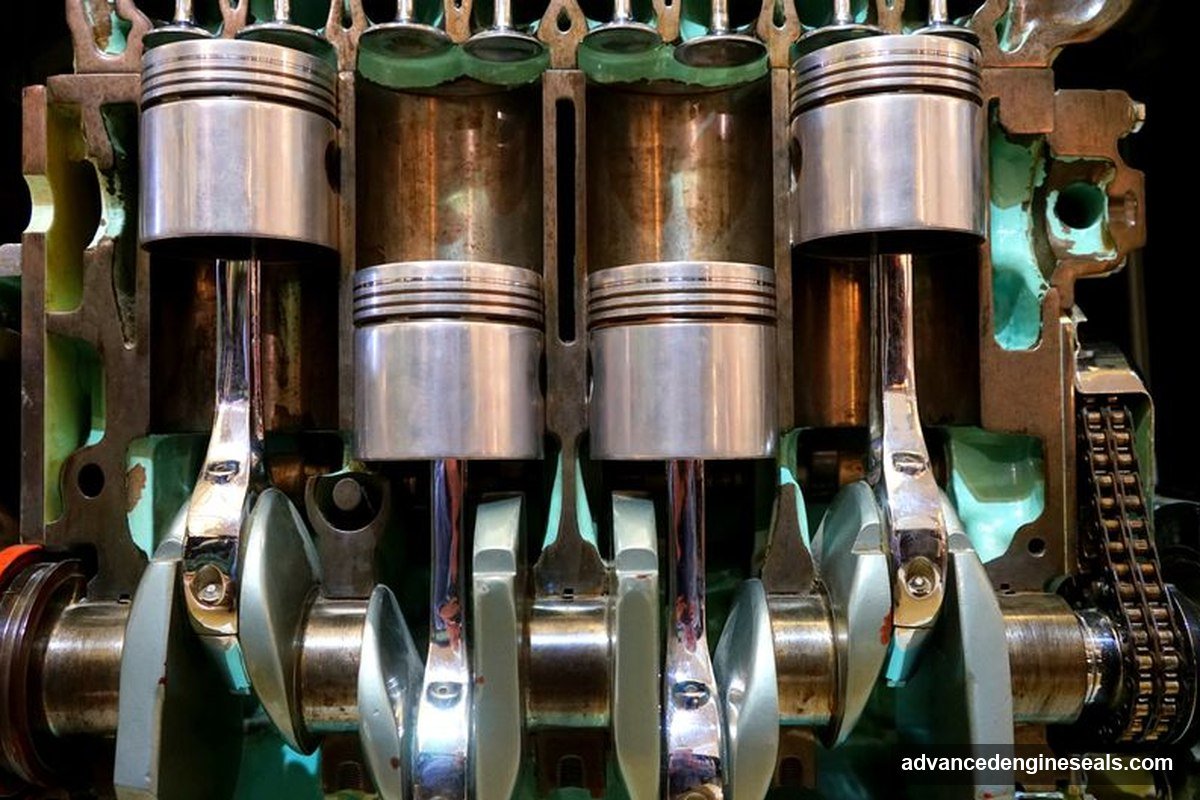
To understand why it leaks, you have to understand what it actually does. Think of your engine’s crankshaft as the main spinning rod that turns the power from your pistons into the movement that actually turns your wheels. This shaft has to stick out of the engine block to connect to your belts and pulleys.
Because that shaft is constantly spinning, we can’t just use a regular gasket to plug the hole where it exits the engine. Instead, we use a specialized part called the front crankshaft seal (some folks call it the front main seal). It’s a circular ring, usually made of high-grade rubber or a tough material called Viton, that “grips” the spinning shaft to keep the oil inside the engine where it belongs.
This seal sits right behind the harmonic balancer—that’s the heavy pulley you see at the very front of the engine. It’s a small part, but it has a massive job. Over time, the heat from the engine and the constant friction of the spinning shaft can cause the rubber to get hard, crack, or simply wear down. Once that happens, you get a front crankshaft seal leak.
Here is the thing you need to remember: On many modern cars, the front seal lives behind the timing belt or timing chain. This means that to get to the seal, you often have to take apart the “heart” of the engine’s timing system. That’s why this isn’t always a “quick five-minute fix.”
Common Symptoms of a Front Crankshaft Seal Leak
One of the trickiest things about car repairs is that oil likes to travel. It can leak from the top of the engine, run down the side, and drip off the bottom, making it look like the leak is coming from somewhere it isn’t. However, a front crankshaft seal leak usually leaves a few specific breadcrumbs.
1. The “Wet” Look Near the Belts
If you pop your hood and look down near the serpentine belt or the accessory pulleys, and everything looks greasy and coated in dark oil, that’s a huge red flag. Since the crankshaft is spinning, a failing seal can actually “fling” oil outward, coating the front of the engine.
2. That Burning Oil Smell
Have you ever been driving and noticed a weird, acrid smell—almost like something is scorching? That’s often oil dripping onto a hot part of the engine, like the exhaust manifold. Because the front seal is located near the front of the block, the oil often drips directly onto those hot exhaust pipes, creating that smell.
3. Slipping or Squealing Belts
If oil gets onto your serpentine belt, it acts like a lubricant in the wrong place. This can cause your belts to slip, leading to loud squealing noises, or it can even cause your power steering or alternator to act up because the belt can’t get a good grip.
4. Watching Your Oil Level Drop
If you find yourself adding a quart of oil every few weeks and you don’t see any other obvious leaks, the front seal is a prime suspect. It might start as a tiny “seepage” that you barely notice, but it can turn into a steady drip before you know it.
How to Diagnose the Leak: Is It Really the Seal?
Before you start ordering parts, you need to be sure. I see DIYers all the time spend hours replacing a seal only to realize the leak was actually coming from the oil pan or a valve cover gasket.
The “Clean and Inspect” Method
The absolute best way to diagnose this is to get the engine clean. I recommend using a decent engine degreaser and a brush to clean off the entire front section of the engine. Once it’s sparkling clean, wipe it dry.
After cleaning, start the engine and let it run for a bit, or take it for a short drive. Then, take a bright flashlight and look closely at the “origin point.” You aren’t looking for where the oil is dripping; you are looking for where it is emerging.
- If the oil is seeping out from the seam where the timing cover meets the engine block, you might just need a new timing cover gasket.
- If the oil is coming from right behind the crankshaft pulley, then you’ve definitely found your front crankshaft seal leak.
| Symptom | Most Likely Culprit | Diagnostic Clue |
|---|---|---|
| Oil dripping from the front pulley area | Front Crankshaft Seal | Oil is visible behind the harmonic balancer. |
| Oil dripping from the middle of the engine | Oil Filter Housing Gasket | Leak is centered around the oil filter mount. |
| Oil pooling directly under the center of the pan | Oil Pan Gasket Leak Symptoms: Diagnosis, Replacement Cost & Repair Guide (2026)”>Oil Pan Gasket | Leak is consistent regardless of engine RPM. |
| Oil dripping from the back of the engine | Rear Main Seal | Leak is at the junction of the engine and transmission. |
| Oil spray on the belt area | Front Crankshaft Seal | Oil is being “flung” by the rotating crankshaft. |
The Repair Process: Replacing the Front Seal
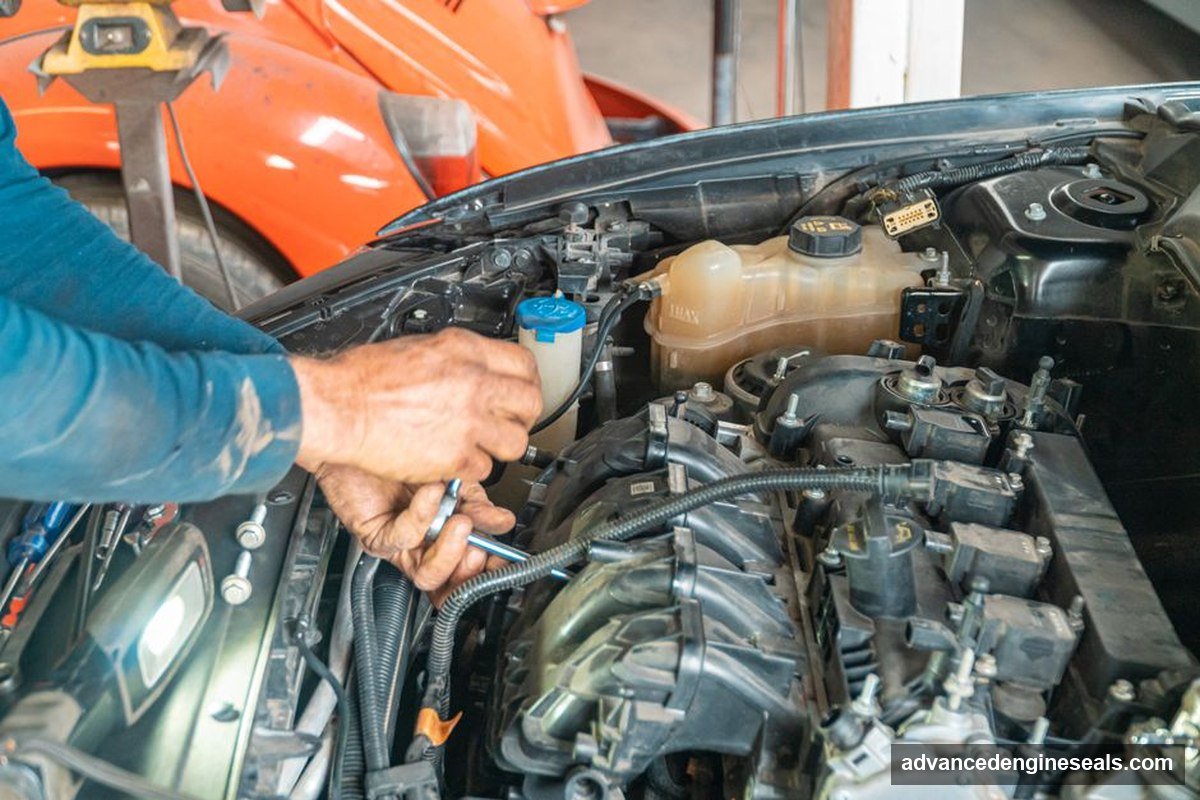
I’ll be honest with you: replacing a front seal is a job that requires patience and the right tools. It isn’t “hard” in the sense of being physically impossible, but it is “fiddly” and requires attention to detail.
The Tools You’ll Need
Don’t try to wing this with just a screwdriver and a hammer. You’ll end up damaging something expensive.
* Harmonic Balancer Puller: You cannot pry the balancer off. You need a dedicated puller to pop it off the crankshaft safely.
* Seal Driver Kit: This is a set of tools used to press the new seal into the engine perfectly straight.
* Socket Set and Torque Wrench: You’ll need to follow the manufacturer’s specs for every bolt you take off.
* New Gaskets: If you’re taking the timing cover off, you’re going to need a new gasket for it.
The Step-by-Step Breakdown
- Preparation: Secure the car on jack stands. You may need to remove some components just to get enough room to work.
- Remove the Belts: Take off the serpentine belt and any pulleys that are in your way.
- Pull the Harmonic Balancer: Use your puller tool to remove the balancer. Be very careful not to scratch the “snout” (the very tip) of the crankshaft.
- Access the Seal: This is the part that varies by car. You’ll likely need to remove the timing belt or timing chain cover to see the seal.
- Pop the Old Seal Out: Use a seal puller to carefully lift the old, leaky seal out of its housing.
- Clean Everything: This is the most important step. Use a lint-free rag and some cleaner to make sure the area where the new seal sits is absolutely spotless. Any tiny piece of grit will ruin the new seal instantly.
- Install the New Seal: Lightly coat the lip of the new seal with a little clean engine oil. Use your seal driver to press it in. It must go in perfectly straight. If it goes in even slightly crooked, it will leak immediately.
- Reassemble: Put everything back together in reverse order, making sure to tighten all bolts to the correct torque.
The “Timing Trap”
I can’t stress this enough: if your car uses a timing belt or a timing chain, this job becomes much more serious. When you remove the timing components to get to the seal, you are messing with the “timing” of your engine. If you put it back together even one “tooth” off, your engine could run poorly or, in the worst-case scenario, the valves could hit the pistons and destroy the engine. If you aren’t 100% confident in setting engine timing, this is the part where you call a professional.
Cost Breakdown: DIY vs. Professional
How much is this going to hit your wallet? It depends on how much “access” your engine has.
| Factor | DIY Estimate | Professional Shop Estimate |
|---|---|---|
| Parts (Seal & Gaskets) | $20 – $60 | $100 – $250 |
| Specialized Tools | $40 – $100 (one-time cost) | Included in labor |
| Labor Hours | 3 – 8 hours (depending on car) | 4 – 10 hours |
| Total Estimated Cost | $60 – $160 | $450 – $1,200+ |
Note: If you have a high-end European car or a heavy-duty diesel, expect the professional labor costs to be on the higher end of that scale.
Top Recommended Replacement Brands & Products
When you’re buying a seal, please, don’t just buy the cheapest one you find on a random website. A seal is a precision part. If it’s a bad part, you’ll be doing this whole job all over again in a month.
### Victor Reinz
- The Vibe: High-end, professional grade.
- Why it’s good: They are a world leader in sealing technology. Many of their parts are the same ones that come in the car from the factory. They use incredibly tough materials that handle heat like a champ.
### SKF
- The Vibe: Precision engineering.
- Why it’s good: SKF is famous for bearings and seals. Their products are built to incredibly tight tolerances, which is exactly what you want when you’re trying to stop an oil leak.
### Fel-Pro
- The Vibe: The reliable “everyman” brand.
- Why it’s good: If you go to a local auto parts store, they almost certainly have Fel-Pro in stock. They are a solid, dependable choice for aftermarket repairs and are very popular with DIY mechanics.
### OEM (Genuine Manufacturer Parts)
- The Vibe: The gold standard.
- Why it’s good: If you want zero guesswork, go to the dealership and buy the part with your car’s VIN. It is guaranteed to be the exact part your engine was designed to use.
Frequently Asked Questions
Can I just ignore a small leak?
You can, but it’s a bit like driving with a slow puncture in a tire. If it’s just a tiny bit of “sweating” or seepage, you can keep an eye on your oil levels and top it off. But if it starts dripping or spraying, you need to fix it. A sudden loss of oil pressure can kill an engine in seconds.
Why did my new seal fail so fast?
Usually, it’s one of three things: the seal was installed crooked, the crankshaft surface was scratched during the old seal removal, or the area wasn’t cleaned properly. If there’s even a tiny bit of dirt under that seal, it’s going to leak.
Does this affect my oil pressure?
The leak itself doesn’t change the pressure inside the engine, but it does change the amount of oil you have. If the leak gets so bad that your oil level drops below what the pump can grab, your oil pressure will drop, and that is a recipe for disaster.
Is this a hard job for a beginner?
It’s an “intermediate” job. The mechanics of the seal are simple, but the “access” is the hard part. If you have to remove a timing chain to get to it, you need to know what you’re doing. If you’ve never timed an engine before, I’d suggest having a pro handle it.
Can I use RTV silicone instead of a new seal?
Absolutely not. This is a common mistake I see. RTV is for flat surfaces, like an oil pan or a valve cover. A crankshaft seal is a mechanical part designed to wrap around a spinning shaft. Silicone cannot do that. If you try to use RTV instead of a proper seal, it will fail almost immediately.
At the end of the day, a front crankshaft seal leak is just a part of owning a vehicle. It can be a headache, but if you catch it early and use the right parts, it’s a very manageable fix. Keep an eye on those puddles, listen for those squeaky belts, and don’t be afraid to get your hands dirty!